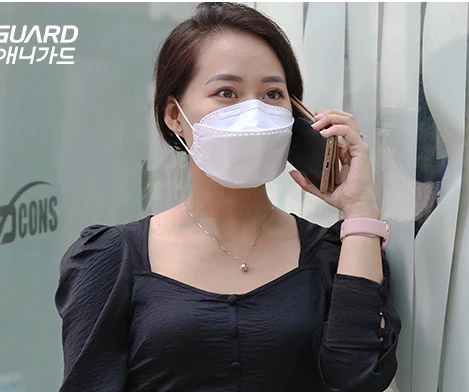
Fine dust is part of daily life in Hanoi, especially during the cooler months, when smog can hang over the city for days at a time. For residents and newcomers, the most practical defences are a properly fitted PM2.5 mask outdoors and clean air at home. This guide explains what PM2.5 is and how Hanoi’s air compares with international guidelines. It also covers how the main mask standards (N95, KN95, KF94 and FFP2) differ, where to buy reliable masks in Vietnam, and how to choose an air purifier for your apartment.
What Is PM2.5 and Why It Matters
PM2.5 refers to airborne particles with a diameter of 2.5 micrometres or less, roughly thirty times smaller than the width of a human hair. They come from vehicle exhaust, construction dust, industry, coal and biomass burning, and the burning of crop residue after harvests. Because they are so small, these particles can travel deep into the lungs, and the finest can pass into the bloodstream. Long-term exposure is associated with respiratory and cardiovascular disease, which is why health agencies treat PM2.5 as one of the most important measures of air quality.
The World Health Organization’s 2021 Air Quality Guidelines recommend that annual average PM2.5 should not exceed 5 µg/m³, and that 24-hour levels should not exceed 15 µg/m³. These are health-based guidelines rather than legal limits, but they are a useful benchmark when you check an air quality app.
Air Quality in Hanoi Today
According to coverage of IQAir’s 2024 World Air Quality Report, Vietnam’s national average PM2.5 concentration was 28.7 µg/m³, placing it 23rd among the most polluted countries in the world and second in Southeast Asia. Hanoi’s own annual average was reported at about 45 µg/m³ in 2024, roughly nine times the WHO annual guideline, and the city’s levels had risen for several consecutive years.
Pollution is strongly seasonal. Vietnamese meteorologists describe the main pollution season as running from October to the end of March, and research has found that temperature inversions, when a layer of warm air traps cooler, dirty air near the ground, occur most often in Hanoi between November and March. On these days, air quality is often worst at night and in the early morning and improves around midday. Summer rains generally bring cleaner air. The city is also working on longer-term measures, including a phased low-emission zone plan for the inner city, although its timetable has been revised more than once.
PM2.5 Mask Standards: N95, KN95, KF94 and FFP2
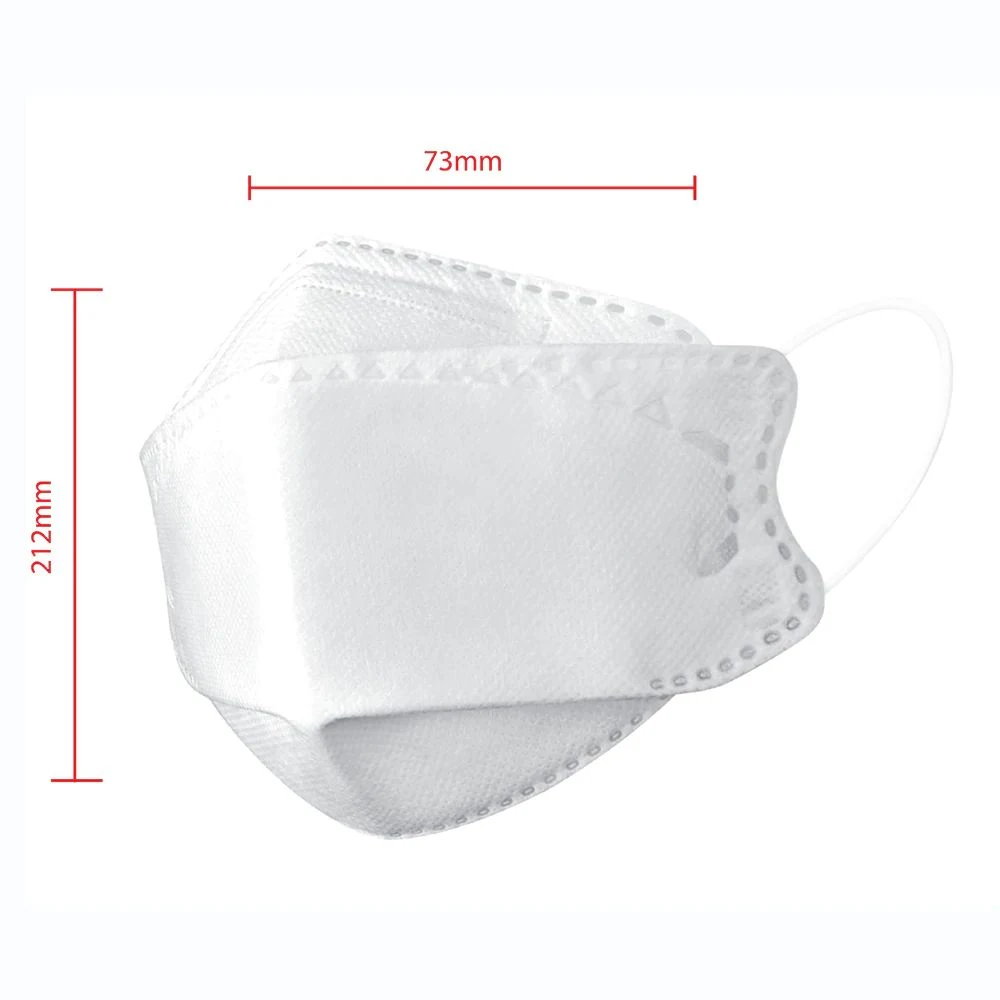
A standard surgical or cloth mask is not designed to seal against the face, so fine particles leak in around the edges. For PM2.5 protection, look for a filtering respirator certified to a recognised standard. The four you will see most often in Vietnam are summarised below.
| Standard | Country / certifying body | Minimum filtration |
|---|---|---|
| N95 | United States – NIOSH (42 CFR 84) | ≥ 95% |
| KN95 | China – GB 2626 | ≥ 95% |
| KF94 | South Korea – MFDS | ≥ 94% |
| FFP2 | European Union – EN 149 | ≥ 94% |
In practice, the headline filtration figures are very close. The differences lie mainly in test methods, such as particle size and airflow rates, and in how certification is checked. NIOSH and Korea’s Ministry of Food and Drug Safety both publish databases of approved products, so N95 and KF94 masks are easier to verify. KN95 has no single public registry, and a 2020 evaluation by the US non-profit ECRI found that a large share of KN95 samples it tested did not meet NIOSH filtration requirements. Buying from a reputable seller matters as much as the label.
Fit matters as much as the filter
Even a certified mask only works if air passes through the filter rather than around it. Choose a size that covers your nose and chin, press the metal nose strip firmly to shape, and check for air escaping at the edges when you breathe out. Beards and loose ear loops reduce the seal. Disposable respirators are designed for limited use, so replace them when they become damp, dirty, damaged or harder to breathe through. Very young children are difficult to fit with adult-style respirators, so for them reducing time outdoors on bad days is often more effective.
Where to Buy PM2.5 Masks in Hanoi
Certified masks are widely available in Hanoi. The major pharmacy chains and independent pharmacies stock KF94, KN95 and sometimes N95 masks, and supermarkets and convenience stores usually carry at least one filtering option. E-commerce platforms offer the widest range, but counterfeit products are a known problem, so buy from official brand stores or verified sellers.
When comparing products, check that the packaging names the standard (for example KF94 with the MFDS approval details, or the NIOSH approval number on an N95), that the mask has a sealing nose strip, and that it is individually or hygienically packed. Avoid products advertised only as “anti-dust” or “4-layer” without a stated standard.
Air Purifiers for Hanoi Apartments
Most people spend more time indoors than outside, so cleaning the air at home, particularly in the bedroom, makes a real difference during the winter pollution season. Look for a portable purifier with a true HEPA filter. Under the US government definition, a HEPA filter removes at least 99.97% of particles 0.3 micrometres in diameter, the size that is hardest to capture. Terms such as “HEPA-type” or “99% HEPA” do not meet that benchmark.
Size the unit by its Clean Air Delivery Rate (CADR) rather than the marketing claim on the box. A common rule from the US appliance association AHAM, repeated in Health Canada guidance, is that the smoke CADR in cubic feet per minute should be at least two-thirds of the room’s floor area in square feet, assuming a standard ceiling height. For a 20 m² bedroom (about 215 sq ft), that means a smoke CADR of at least about 145 CFM; rooms with high ceilings or open-plan living areas need a larger unit or more than one.
- Keep windows closed on high-AQI days and run the purifier continuously at a quiet setting rather than in short bursts.
- Replace filters on schedule, which is often sooner in Hanoi’s winter than the manufacturer’s general estimate.
- Use the kitchen hood when cooking, as frying and gas stoves also produce fine particles indoors.
- Check an AQI app before exercising outdoors and shift runs or cycling to midday on inversion days.
Where you live also affects your daily exposure. Apartments set back from major roads, with good window seals and building-level ventilation, are easier to keep clean. Our guide to apartments for rent in Tay Ho covers greener lakeside neighbourhoods, and newer projects are increasingly designed around wellness standards, as in our article on Maison Privée’s WELL-focused design. You can also compare buildings across the city in our list of apartment buildings in Hanoi.
Frequently Asked Questions
What does PM2.5 mean?
PM2.5 is airborne particulate matter 2.5 micrometres or smaller in diameter. These particles are small enough to reach deep into the lungs, which is why they are a key measure of air quality.
Which mask is best for PM2.5 in Vietnam?
A well-fitted respirator certified as N95, KN95, KF94 or FFP2 filters at least 94–95% of test particles. Fit and a genuine certification matter more than the specific standard, so choose one that seals well on your face and comes from a reputable seller.
Is KF94 as good as N95?
The minimum filtration ratings are very close: 94% for KF94 and 95% for N95, measured under slightly different test conditions. Both are backed by public approval databases, which makes genuine products easier to verify.
When is air pollution worst in Hanoi?
The main pollution season runs from about October to March, with temperature inversions most frequent between November and March. On those days, levels are typically highest at night and early morning.
What size air purifier do I need for my apartment?
Choose a true HEPA purifier whose smoke CADR, in cubic feet per minute, is at least two-thirds of the room’s floor area in square feet. For a 20 m² bedroom, that is a smoke CADR of at least about 145 CFM.