


Hanoi sits in the humid subtropical north of Vietnam, so unlike Ho Chi Minh City, which has only a wet and a dry season, the capital has four seasons you can actually feel. Summers are hot, wet and sticky, winters are cool and grey, and spring and autumn are short transitions in between. For anyone moving here, the weather affects more than what to pack: it shapes which apartment works for you, what the electricity bill looks like in July, and how much attention your home needs during the damp months. This guide walks through the seasons, typical monthly figures and the practical side of living with Hanoi’s climate.
Hanoi climate at a glance
Hanoi’s average annual temperature is around 23–24°C, but that number hides a wide swing between seasons. January is the coolest month, with daily averages in the mid-teens, while June and July average around 29–30°C with afternoon highs in the low to mid-30s. Most of the year’s rain, roughly 1,600–1,800 mm in total, falls between May and October, often as short, heavy afternoon downpours or thunderstorms. Relative humidity stays high almost all year, typically 75–85%, and peaks in late winter and spring when the city goes through its well-known damp spells.
Two forces drive this pattern. From roughly November to March, the northeast monsoon brings cooler, drier continental air in waves, so temperatures can drop sharply over a day or two. From May to September, the southwest and southeast monsoon brings warm, moist air from the sea, along with the heat and storms of summer. It never snows, but damp winter air often feels colder than the thermometer suggests, especially indoors.
The four seasons in Hanoi
Spring (February to April)
Spring starts around the Lunar New Year (Tết), which usually falls in late January or February. Early spring is still cool and often overcast, with fine drizzle that can last for days. As the cold air weakens, warm and very moist air moves in from the sea, and this is when the nồm season appears: floors, walls and mirrors “sweat” as humidity climbs above 90%. By April, afternoons regularly reach the high 20s and the first summer thunderstorms arrive. Peach blossom, sold on every corner before Tết, is the season’s symbol.

Summer (May to September)
Summer is long, hot and humid. Daytime highs usually sit between 32°C and 35°C, and heatwaves can push afternoons into the high 30s, with only a small drop at night. This is also the rainy season: August is typically the wettest month, with around 300 mm of rain, and a single storm can flood low-lying streets within an hour. Tropical storms and typhoons that make landfall on the northern coast can bring days of heavy rain and strong wind to the city, as Typhoon Yagi did in September 2024. Sun protection, a good umbrella and a light rain jacket are everyday essentials.
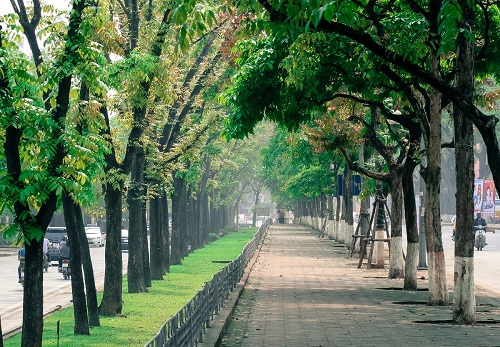
Autumn (late September to November)
For many residents, autumn is the best time of year. Rain eases from October, humidity drops, and temperatures settle into the low to high 20s with clear skies and cooler evenings. The scent of milk flower (hoa sữa) trees fills many streets in October and November, and it is the most comfortable season for walking around the lakes or exploring the city on foot.

Winter (December to February)
Winter arrives in waves as cold air masses push down from the north. Average lows in January are around 13–14°C, and during strong cold spells the temperature can fall below 10°C for several days. Skies are often grey, with light drizzle rather than heavy rain. Because most Hanoi homes are built for heat rather than cold, indoor rooms can feel chilly, so warm layers, a good duvet and a heater or reverse-cycle air conditioner make a real difference.

Hanoi weather by month: temperature, rainfall and humidity
The table below shows approximate long-term averages, rounded from published climate summaries for Hanoi. Datasets differ slightly and individual years vary, so treat these figures as typical values rather than a forecast.
| Month | Average high (°C) | Average low (°C) | Rainfall (mm) | Relative humidity (%) |
|---|---|---|---|---|
| January | 20 | 14 | 20 | 78 |
| February | 21 | 16 | 25 | 82 |
| March | 23 | 18 | 45 | 83 |
| April | 28 | 22 | 90 | 84 |
| May | 32 | 25 | 190 | 80 |
| June | 33 | 27 | 240 | 80 |
| July | 33 | 27 | 290 | 81 |
| August | 32 | 26 | 310 | 83 |
| September | 31 | 25 | 250 | 80 |
| October | 29 | 22 | 130 | 77 |
| November | 26 | 19 | 50 | 75 |
| December | 22 | 15 | 20 | 75 |
For day-to-day forecasts, storm warnings and cold-spell alerts, the official source is Vietnam’s National Center for Hydro-Meteorological Forecasting, which publishes updates for Hanoi in Vietnamese.
Air quality season in Hanoi
Air pollution is now as important as temperature when planning life in Hanoi. Fine particulate matter (PM2.5) levels are generally worst from around October or November to March. In these months, cooler air near the ground and light winds trap emissions from traffic, construction, industry and agricultural burning around the city, and haze can linger for days. Summer rain and stronger winds usually clear the air, so the same street can feel very different in July and January. Hanoi has at times ranked among the most polluted cities in the world during winter, and the government has announced a phased plan under Directive 20/CT-TTg (2025) to restrict petrol motorbikes in the city centre, starting inside Ring Road 1.
Many residents check a real-time air quality app before exercising outdoors in winter and keep windows closed on high-pollution days. An air purifier with a HEPA filter for the bedroom is a common purchase. When viewing an apartment, it is worth asking whether the windows seal well and whether the building is next to a major road or an active construction site.
What Hanoi’s climate means when choosing an apartment
The climate should be part of your checklist when comparing homes. Orientation matters: west-facing units can get very hot on summer afternoons, while units with north or east exposure and good cross-ventilation are usually more comfortable for more of the year. Higher floors tend to be less damp and get more air movement, while ground-floor and low-floor units, especially in older houses, are more exposed to rising damp, flooding during heavy storms and condensation in the nồm season.
Inside the unit, look for air conditioners in every bedroom and the living room, ideally inverter models with heating and a dry (dehumidify) mode. A clothes dryer or a washer-dryer, an extractor fan in each bathroom and tiled or sealed floors are all worth asking about. Check corners, wardrobe backs and window frames for mould stains, which usually reveal a damp problem that will return each spring. Our list of apartment buildings in Hanoi is a useful starting point for comparing newer buildings, which generally have better windows, drainage and ventilation than older stock.
If you are buying rather than renting, the same checks apply with more weight. When viewing second-hand properties for sale, ask the owner how the unit behaves in the rainy season and in the nồm months, and look for signs of leaks around windows, balconies and air-conditioner pipes.
A seasonal maintenance calendar for your home
Living comfortably in Hanoi is mostly about preparing a little before each season changes. Before summer, have the air conditioners cleaned and serviced, since dusty filters cut efficiency just as you need it most and can spread musty smells. Before the rainy season, check balcony drains, window seals and any roof or terrace waterproofing, and move valuables off the floor if you live in a house or on a low floor.
In autumn, replace or clean air purifier filters before the pollution season starts. From February to April, the priority is moisture control: keeping doors and windows shut on damp days, running a dehumidifier or the air conditioner’s dry mode, and drying laundry indoors with a machine. We cover these steps in detail in our guide to humid weather in Hanoi and how to clean your house.
Frequently Asked Questions
What is the best time of year to visit or move to Hanoi?
October and November are usually the most pleasant months, with mild temperatures, low rainfall and clear skies. March and April are also comfortable, although they can be damp and overcast.
Does it snow in Hanoi?
No, it does not snow in Hanoi. January is the coldest month, with average lows around 13–14°C, and strong cold spells can bring temperatures below 10°C for a few days.
When is the rainy season in Hanoi?
Most rain falls from May to October, with August usually the wettest month at around 300 mm. Rain often comes as heavy afternoon storms, and tropical storms can bring several days of rain.
When is air pollution worst in Hanoi?
Air quality is generally worst from around October or November to March, when cool, still air traps pollution near the ground. Summer rain and wind usually improve conditions.
What should I look for in a Hanoi apartment because of the weather?
Check for air conditioners with heating and dry mode, good window seals, bathroom extractor fans, a clothes dryer and no signs of mould. Higher floors and units that avoid strong west sun are usually more comfortable.