• Change Your Currency

  • Measurement Unit

What Does a Pink Book for Foreigners
in Vietnam Look Like?

Updated in 2026

One of the biggest concerns foreign buyers have in Vietnam is:

“Can I really own property here legally?”

In this guide, we’ll show you what a foreigner’s Pink Book looks like, how the process works, and what every buyer should know after purchasing an apartment in Vietnam.

What Is a Pink Book in Vietnam?

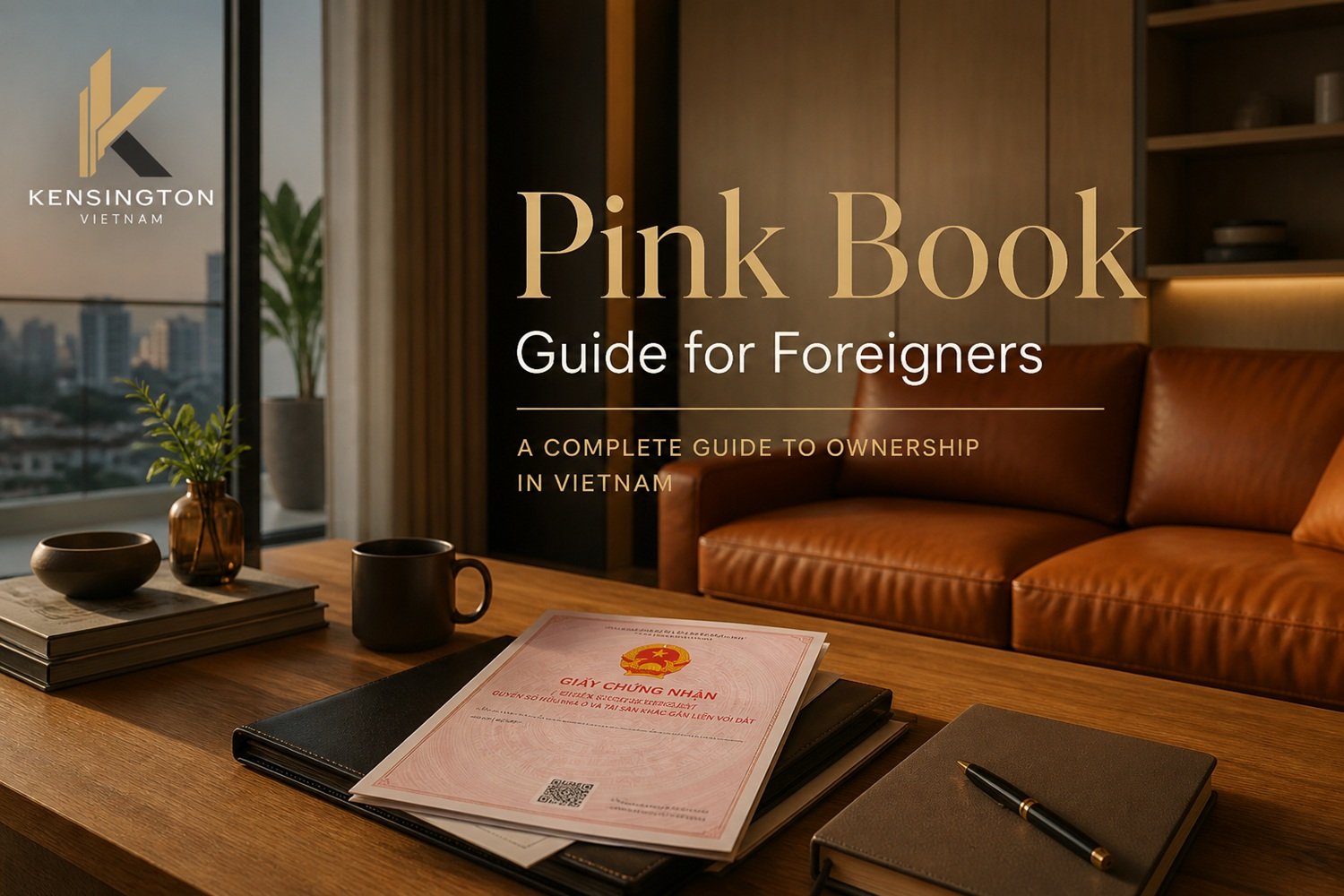
A “Pink Book” is the common name for Vietnam’s official property ownership certificate issued by Vietnam Authorities. In Vietnamese, it is called:

Giấy chứng nhận quyền sử dụng đất, quyền sở hữu nhà ở và tài sản khác gắn liền với đất

English: Certificate of Land Use Rights, Ownership of Houses and Other Assets Attached to Land

“Pink Book” is not an official name but a nick name and the document itself may appear in slightly different shades or formats depending on the issuance period and regulations at the time.

pink book for foreigners in vietnam

While a Sales and Purchase Agreement (SPA) is legally sufficient to prove ownership and facilitate resale in Vietnam, obtaining a Pink Book is highly recommended for long-term investors. As an official state-issued certificate, the Pink Book provides absolute legal recognition under Vietnamese law, streamlining future transactions and ensuring full autonomy from the developer during the resale process

The Pink Book typically contains information such as:

  • Owner’s full name
  • Nationality
  • Passport number
  • Apartment details
  • Building/project information
  • Ownership term
  • Issuing authority

Today, thousands of foreign owners across Hanoi and Ho Chi Minh City already hold Pink Books legally for their apartments in approved residential projects.

What Does a Foreigner’s Pink Book
Look Like?

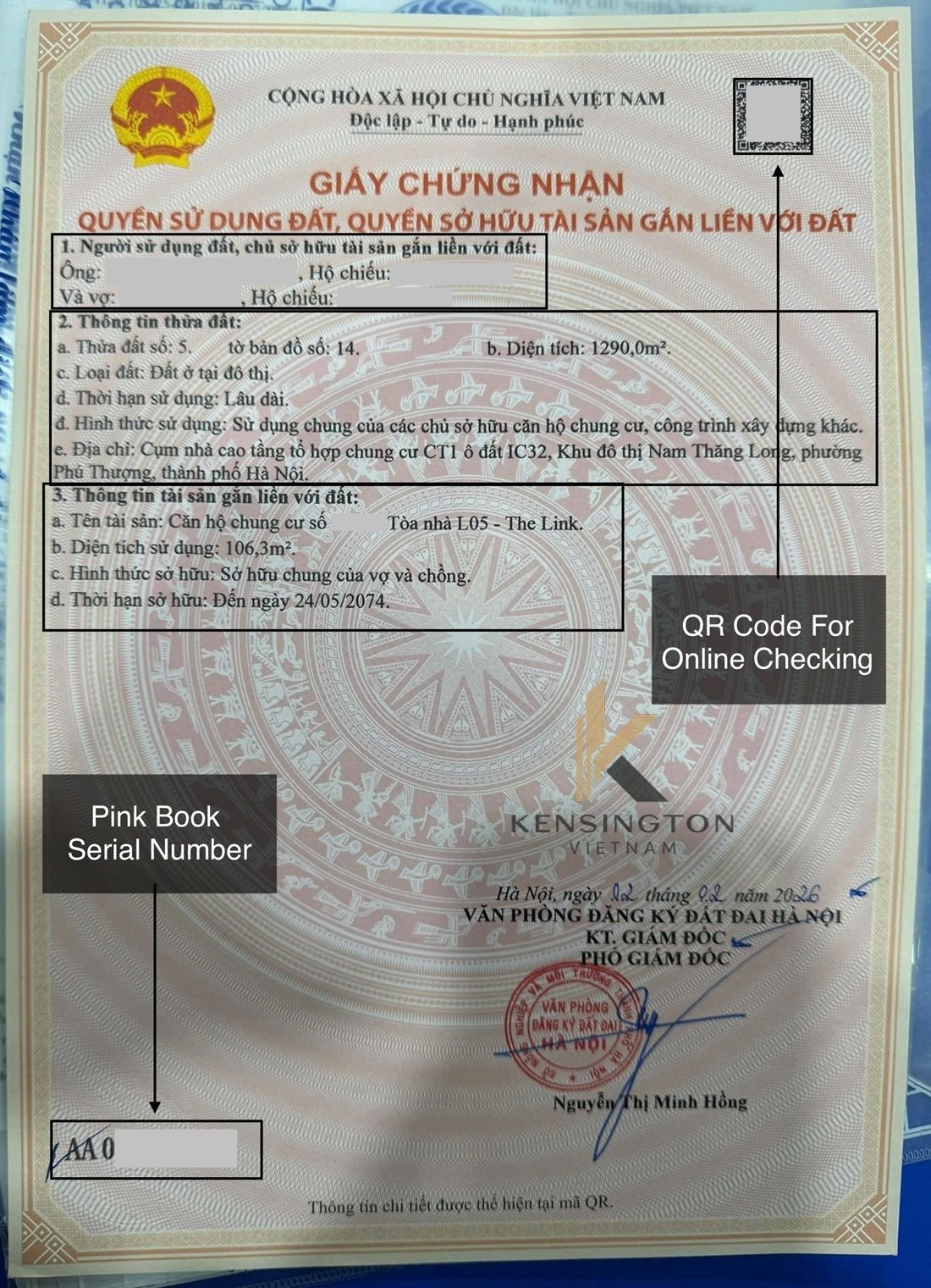
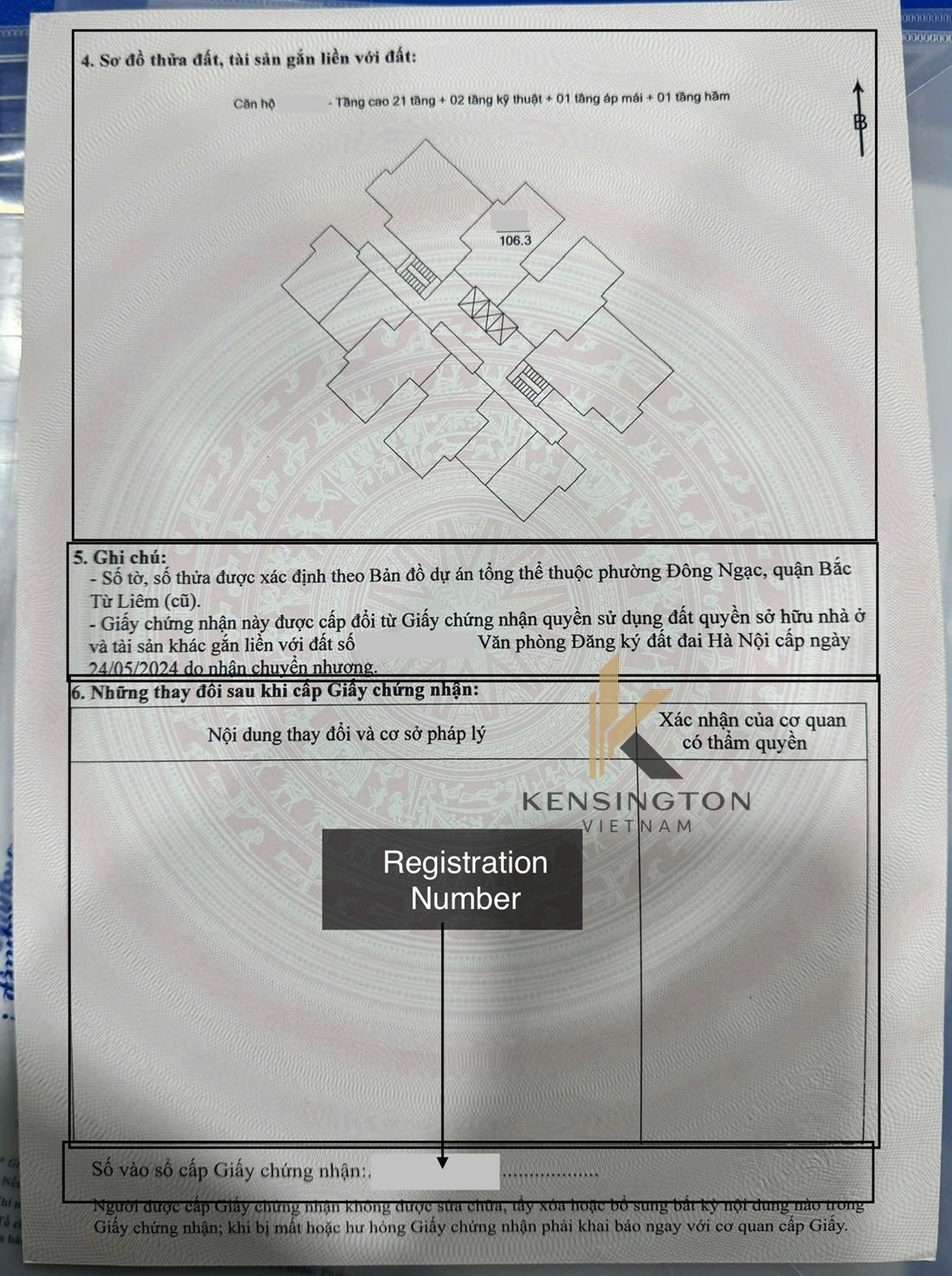
Note: This is the new 2025 Pink Book format which is a single sheet printed on both sides. Older versions issued before 2025 come in a 4-page folder format.

Front Side of The Pink Book

Section 1: Owner information, including the owner’s full name (and spouse’s name, if applicable) and passport number.

Section 2: Information about the land plot of the entire building, including its location on the administrative map, land area, land category, form of land use, land use term, and official administrative address.

Section 3: Information about your property asset, including the property name, net floor area (NFA), ownership form (sole ownership or joint ownership with spouse), and ownership term.

Backside of The Pink Book

Section 4: A land plot diagram or a floor plan marking the apartment location, together with brief technical descriptions of the building and the apartment.

Section 5: Notes regarding the origin of the property and the most recent transfer or transaction history.

Section 6: A section reserved for supplementary information, amendments, and official corrections.

Why Should You Apply for Pink Book?

SPA vs. Pink Book: Why settle for a contract when you can have a title? Here is what every foreign owner needs to know.

Independence from Developers

Selling a property with only an SPA usually requires the developer to issue a "Confirmation of Transfer." If the developer is slow, unresponsive, or faces financial trouble, your exit strategy is stalled. With a Pink Book, you bypass the developer entirely.

Legal "Shield" For 50 Years

For foreigners, Pink Book clearly states the 50-year ownership term. Under the law, having this official document makes the one-time extension (another 50 years) a much more straightforward administrative process.

Compact & Lightweight

The Pink Book replaces the need to carry a thick folder of contracts, appendices, and hand-over records. Ownership is now distilled into one elegant, double-sided document, making it much easier to store and manage.

Financing Readiness

Pink Book is essential for property-backed loans. While current lending for foreigners is limited to TRC terms, holding official title ensures you are 'first in line' to leverage your investment as the banking sector opens up more competitive products.

Through The Developer's Support

How Do Foreign Buyers Obtain a Pink Book?

For most foreign buyers in Vietnam, Pink Book application process typically begins around the apartment handover stage. At this point, the developer usually notifies buyers to complete the final 5% payment of the apartment value and simultaneously starts collecting the required documents for Pink Book application procedures.

While the exact process may vary slightly between projects and developers, the general timeline usually follows these steps:

Purchase the Property

The buyer signs the official Sales & Purchase Agreement (SPA) with the developer. Check buying process.

Receive Apartment Handover

Once the apartment is completed and ready, the buyer receives handover from the developer.

Developer Collects Required Documents

Most developers will later notify buyers when it is time to prepare documents for the Pink Book application.

Submission to Authorities

After collecting all necessary documents, the developer (or authorized parties) submits the application dossier to the relevant Vietnamese authorities.

Registration Fee Notice & Payment

After the application receives approval from the authorities, the buyer will typically receive a registration fee notice for the ownership registration process.

Pink Book Issuance

Once all procedures and payments are completed, the Pink Book is officially issued under the buyer’s name.

How Long Does It Take to Issue a Pink Book for Foreign Owners?

In practice, Pink Book issuance process for foreign owners in Vietnam usually takes around 3 to 6 months after all required documents have been submitted. However, in some projects or locations, the process may take longer, sometimes up to 1 year or more.

If you have already submitted your documents but still have not received the Pink Book yet, there is usually no immediate reason to panic. Processing timelines can vary depending on:

In reality, applications involving foreign buyers are often processed more carefully and may move slower than local ownership cases. For this reason, it is important to:

In most cases, as long as the project is legally eligible and the application dossier is complete, the Pink Book can still be issued even if the process takes longer than expected.

Documents Required for Pink Book Application

When applying for a Pink Book in Vietnam, foreign buyers are typically required to prepare a set of personal and transaction-related documents. The exact requirements may vary slightly depending on the project, developer, and local authority, but the following documents are commonly requested:

1. Passport

Usually including:

  • Original passport for verification
  • Vietnamese notarized translation
  • Certified true copy (notarized copy)

2. Valid Visa or Legal Entry Documents

Foreign buyers are generally required to provide proof of legal entry into Vietnam.

Accepted documents may include:

  • A valid Vietnam visa
  • An entry stamp in the passport (for individuals from countries eligible for Vietnam visa exemption)
  • A valid Temporary Residence Card (TRC)

This requirement usually does not apply to:

  • diplomatic or embassy-related organizations & indivivuals

3. Marriage Certificate or Marital Status Certificate

(If single, a Marital Status Certificate may be required)

Typically including:

  • Original document
  • Vietnamese notarized translation
  • Certified true copy (notarized copy)
  • Consular legalization stamp/apostille if required
    (except for countries or cases exempt under applicable agreements)

Note:

For married couples purchasing jointly, the ownership information on the Pink Book will usually reflect both spouses.

Consular legalization is often the most complicated part of the document process. However, there is good news for citizens of Apostille member countries: Vietnam officially joined the 1961 Hague Apostille Convention on December 31, 2025, and it will take effect from September 11, 2026.

Once effective, many public documents will only require a single Apostille certificate instead of traditional consular legalization procedures.

4. Sales & Purchase Agreement (SPA)

The SPA is one of the key legal documents for the Pink Book application process.

In practice, many developers may not ask buyers to resubmit the SPA because they already retain an original copy within their internal records. However, buyers should still keep their own complete signed copy carefully for future reference.

What Happens If You Miss the Developer’s Support Period?

Yes, it is still possible to apply for a Pink Book even if you missed the developer’s original support period.

However, the process usually becomes:

  • more complicated
  • more time-consuming
  • less convenient for foreign owners

In many projects, developers only actively support Pink Book applications during a certain collection period after handover. If buyers miss this stage, they may need to handle the process themselves or hire a third-party service later.

If You Decide to Handle It Yourself

The owner will usually need to visit the developer’s office first, ideally by scheduling an appointment in advance and working directly with the responsible agent.

You may need to request the full set of documents related to the Pink Book application process, including:

  • electronic VAT invoices
  • payment confirmation records
  • confirmation that no previous Pink Book application has been submitted
  • handover documents
  • relevant legal paperwork related to the apartment purchase

After collecting the documents, the owner will typically need to submit the application directly at the public administrative service center (One-Stop Administrative Office) in the district or city where the property is located.

This includes:

  • completing declaration forms
  • preparing supporting documents
  • submitting the application dossier
  • following up on processing status

Important Advice for Foreign Owners

In practice, this process can be quite difficult for many foreign buyers.

Some common challenges include:

  • most forms and declarations are entirely in Vietnamese
  • administrative procedures can be complicated
  • government officers may have limited English communication
  • service centers are often crowded with long waiting times
  • missing paperwork can lead to repeated visits

For these reasons, many foreign owners choose to work with a professional support service instead of handling the process alone.

If you need assistance with Pink Book application procedures in Hanoi, feel free to contact Kensington Vietnam for support and guidance.

What If You Lose Your Pink Book?

Losing a Pink Book can be stressful, especially for foreign property owners in Vietnam. However, in most cases, it is still possible to apply for a replacement Pink Book through the proper administrative procedures. The exact process may vary depending on the local authority and the specific ownership situation, but it generally involves several steps.

Common Procedures May Include:

Police Declaration or Loss Report

The owner may be required to file a declaration or report regarding the lost Pink Book with the local police or relevant authority.

Public Announcement Procedures

In some cases, authorities may require a public notice regarding the lost ownership certificate before re-issuance can proceed.

Ownership Verification

Authorities will usually review and verify: ownership records, transaction history, identity documents, previous registration information

Re-Issuance Application

After completing the required procedures, the owner can submit an application for re-issuance of the Pink Book.Additional supporting documents and declarations may also be requested depending on the case.

Important Advice

If your Pink Book is lost:

  • keep calm
  • prepare copies of related ownership documents if available
  • contact the developer, management office, or a professional support service early

Having digital copies of important documents such as:

  • the Pink Book
  • SPA
  • handover minutes
  • payment receipts

can make the recovery process much easier later.

Common Misunderstandings

There are many misconceptions surrounding Pink Books and foreign property ownership in Vietnam. Below are some of the most common misunderstandings among international buyers.

1. “The Developer Issues the Pink Book”

Not exactly.

The Pink Book is officially issued by the Vietnamese authorities, not by the developer.

The developer’s role is usually to:

  • collect buyer documents
  • prepare application dossiers
  • support submission procedures
  • coordinate with authorities during the process

The final issuance decision always comes from the competent government authority.

2. “Without a Pink Book, I Cannot Sell the Apartment”

Not necessarily.

Even if the Pink Book has not been issued yet, owners can still transfer or sell the property in many cases through:

  • the Sales & Purchase Agreement (SPA)
  • transfer agreements
  • developer-supported procedures

This is relatively common in newer projects where Pink Book issuance is still in progress.

However, having a Pink Book generally makes resale procedures smoother and increases buyer confidence.

3. “I Bought the Property, So I Should Receive the Pink Book Immediately”

Not for most presale projects.

In Vietnam, many apartments are purchased before construction is fully completed. In these cases, the Pink Book application process usually only begins after:

  • the apartment is completed
  • handover takes place
  • the developer starts collecting ownership application documents

As a result, there is often a waiting period between purchase and Pink Book issuance.

4. “A Pink Book Means Permanent Ownership for Foreigners”

Not exactly.

For foreign individuals in Vietnam, residential property ownership is generally limited to:

  • up to 50 years per ownership term
  • with possible extension under applicable regulations

This differs from the long-term ownership rights commonly granted to Vietnamese citizens.

The exact ownership term is clearly stated inside the Pink Book itself.

5. “All Properties Available to Foreigners Will Receive a Pink Book”

Not always.

Only legally approved residential housing projects are typically eligible for Pink Book issuance for foreign buyers.

Some properties sold to foreigners under:

  • long-term lease structures
  • certain commercial property models
  • unofficial investment arrangements

may not qualify for a residential Pink Book.

In addition, some commercial products may not provide Pink Book issuance for foreign individuals at all.

For this reason, foreign buyers should always verify the legal ownership structure carefully before purchasing a property in Vietnam.

6. “Why Does My Pink Book Only Have One Sheet?”

Do not worry! This may simply be due to a newer document format.

Pink Books issued before 2025 were typically printed as a multi-page folder format with four pages.

However, from 2025 onward, Vietnam introduced a newer format using:

  • a single double-sided sheet
  • integrated QR code verification
  • updated administrative layout

Both formats are valid official ownership certificates.

In the future, Vietnam is also expected to continue moving toward digitalization of property ownership records, and physical Pink Books may eventually become less important or no longer mandatory in certain procedures. However, these changes are still part of ongoing policy development and are not yet officially implemented nationwide.

Other Frequently Asked Questions

Find answers to the other common questions about buying property in Vietnam as a foreigner

Pink Books for foreign owners are generally issued by the Department of Agriculture and Environment (Sở Nông nghiệp và Môi trường) or the competent land administration authority in the province or city where the property is located.

Normally, no.

In many cases, once the Pink Book application dossier has been officially submitted, the property cannot be transferred until the issuance process is completed.

However, owners may sometimes request to withdraw the application dossier before proceeding with a resale transaction.

No, it is generally not necessary.

Both: the older folder-style format and the newer one-sheet format with QR code are legally valid and can still be used for normal transactions and ownership verification.

You can request an official correction or amendment.

Owners may apply for:

  • information correction
  • ownership detail updates
  • re-issued documents reflecting the corrected information

Usually, no.

An expired passport linked to the Pink Book does not automatically invalidate the ownership certificate.

You can still use the existing Pink Book for normal transactions. However, during notarization or transfer procedures, the notary office may request: your new passport and copies or images of the old passport shown on the Pink Book for identity verification purposes.

Yes.

The legal status of a Pink Book can typically be checked through: notary offices, land registration authorities, relevant administrative offices in the province or city where the property is located.

This is one of the important steps before completing a property transaction in Vietnam.

Yes, fake ownership certificates do exist.

For this reason, buyers should work with professional agents before making payments or signing agreements.

Legal verification before transaction is extremely important.

In many cases, the ownership update process takes around 45 days.

However, actual timelines may vary depending on: administrative processing speed, local authority workload, completeness of submitted documents.

In some cases, the process may take longer than expected.
Secure Your Property in Vietnam as a Foreigner

Our team helps international buyers identify legally compliant, high-performing properties from the start.

Tell Us What You’re Looking For

Let us know your preferences, budget, and timeline, and we’ll help you find the perfect property in Vietnam quickly and efficiently.

Discover More

Whether you are looking for stable rental income or long-term capital growth, explore curated properties aligned with your investment strategy.

Top Investment
Locations

Explore the most sought-after locations in Hanoi, popular among foreign buyers and investors for their prime positioning, vibrant lifestyle, and strong growth potential.

5/5 - (1 vote)

Compare Listings