Can Foreign Companies Buy Property in Vietnam? Laws & Regulations (2026)
Many foreign investors and business owners wonder whether they should buy property in Vietnam through a company or in their personal name.
yes, a foreign-invested company can own certain types of property, but the rules depend on the property's purpose and the company's legal status.
Navigating property acquisition in Vietnam as a foreign-invested enterprise (FIE) requires understanding recent legislative updates, specifically under the 2023 Housing Law and 2024 Land Law (effective August 1, 2024, with full implementation standards in 2026).
In this guide, we’ll explain what a foreign company can and cannot buy, how the process works, and the key differences between buying as a company and as an individual. Whether you’re looking for an office, staff housing, or a long-term investment, this guide will help you understand your options before making a decision.
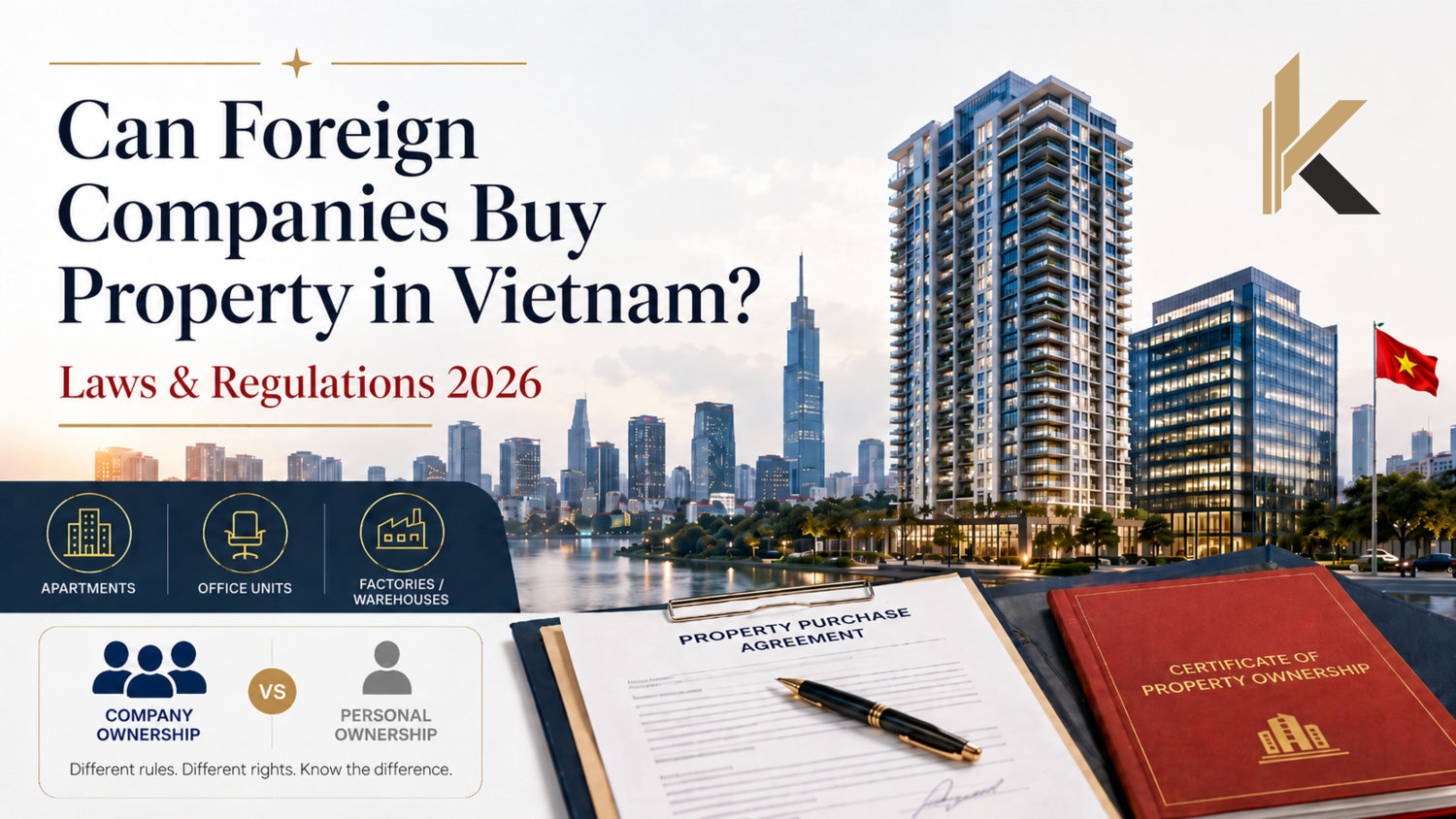
Who Is Considered a Foreign Company?
In Vietnam, a foreign company generally refers to a foreign-invested enterprise (FIE) a company established under Vietnamese law with partial or full foreign ownership. These companies are licensed to operate in Vietnam and can conduct business within the scope stated in their Enterprise Registration Certificate (ERC) and, where applicable, their Investment Registration Certificate (IRC).
Examples include:
- A 100% foreign-owned company established in Vietnam.
- A joint venture between a Vietnamese and a foreign investor.
- A Vietnamese company with foreign capital
It’s important to note that an overseas company that has not established a legal entity in Vietnam cannot directly purchase property in Vietnam. In addition, a representative office is generally not allowed to own real estate because it is not a separate legal entity and cannot conduct profit-generating business activities.
Which Foreign Companies
Can Buy Property in Vietnam?
Not every foreign company in Vietnam has the same rights when it comes to buying property. In practice, eligibility depends on the company’s registered business activities and the purpose of the purchase.
Case 1
Foreign Companies Registered for Real Estate Business
A foreign-invested company that registers Real Estate Business (Business Code 6810) may purchase property for commercial purposes, such as buying, selling, leasing, or investing in real estate. Once properly established, the company may buy and lease property as part of its business activities, subject to the relevant regulations.
Case 2
Foreign Companies Buying Property for Their Own Use
A foreign company that is not engaged in the real estate business may still purchase property for its own operational needs. The property must be used for the company’s own purposes and cannot be leased to third parties as a commercial rental business.
| Criteria | Real Estate Company | Non-Real Estate Company |
|---|---|---|
| Purpose of Purchase | Real estate investment, resale, and leasing | Accommodation for employees or business operations |
| Business Code 6810 | Required | Not required |
| Can Buy Property? | Yes | Yes |
| Can Sell the Property? | Yes | Yes |
| Can Lease to Third Parties? | Yes | No |
| Can Provide Housing for Employees? | Yes | Yes |
| Typical Buyers | Real estate developers, property investment companies | Manufacturers, factories, multinational corporations, representative operating companies |
What Types of Property
Can a Foreign-Invested Company Buy?
A foreign-invested enterprise (FIE) in Vietnam can purchase or acquire certain types of property, the list below provides a general overview.
Residential Apartments
In approved residential projects or by purchasing from another eligible foreign owner or foreign-invested company, subject to foreign ownership limits.
Residential Houses
Only in a small number of approved projects where foreign ownership is permitted. Availability is much more limited than apartments.
Office Units
Can be purchased for the company's own use or investment, depending on the project's legal status and the company's business activities.
Factories & Warehouses
Available in approved industrial parks or industrial developments, subject to investment regulations and land use rights
Ownership Certificate
for Properties Purchased by a Company
When a foreign-invested company purchases property in Vietnam, the Ownership Certificate (commonly known as the Pink Book) is issued in the company’s name, not in the name of its shareholders, directors, or legal representative.
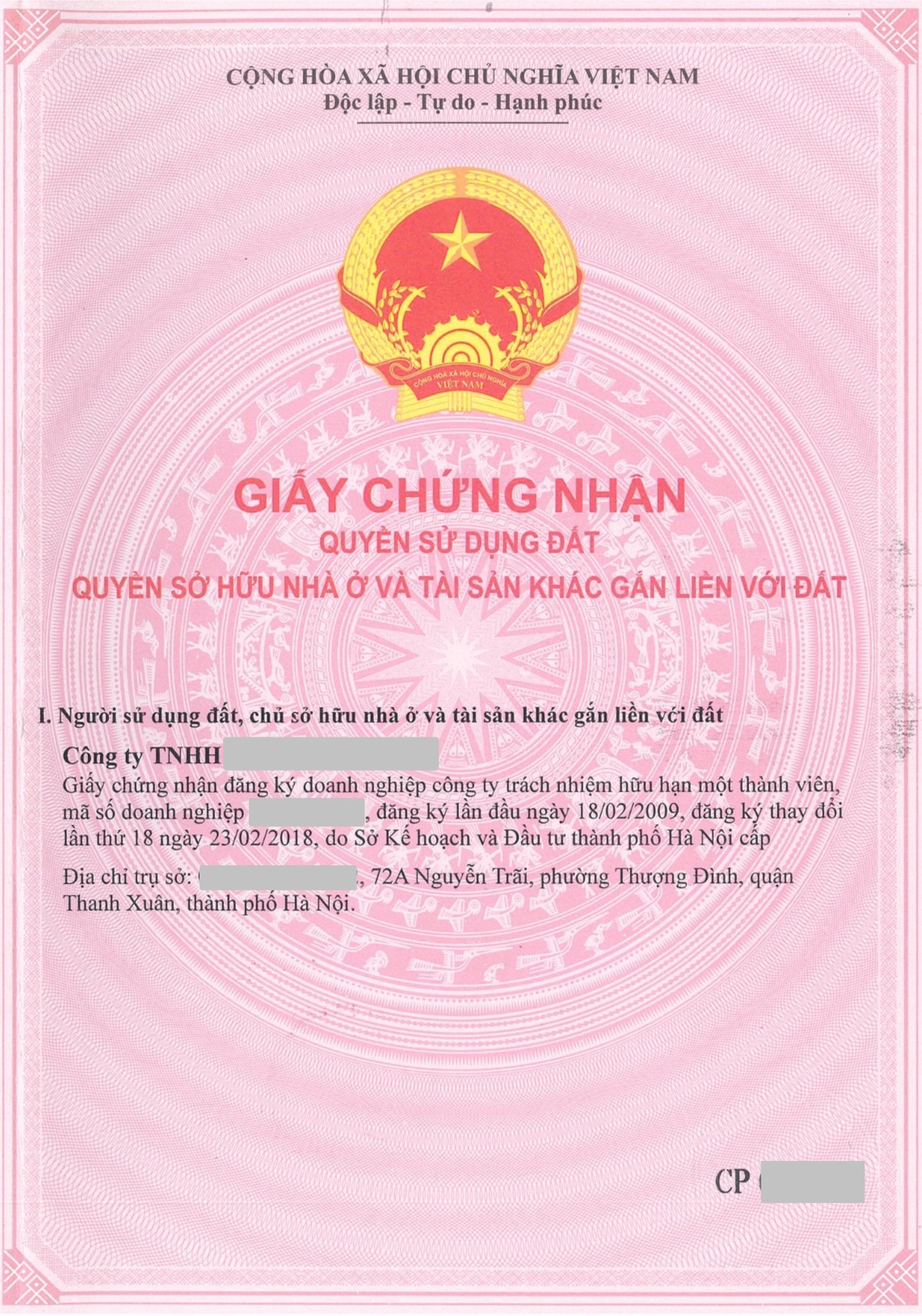
The certificate typically includes:
- Company name
- Business Registration Number
- Company address
- Details of the property
- Ownership information
The company is recognized as the legal owner of the property. Even if the company’s shareholders change, ownership of the property remains with the company unless the property is legally transferred to another owner. The ownership term shown on the Pink Book will not exceed 50 years or the remaining operating term of the company stated in its Investment Registration Certificate (IRC).
What Happens If the Company Is Sold or Dissolved?
If the company is sold
The property remains owned by the company. Only the ownership of the company changes.
If the company is dissolved
The property must be disposed of during the liquidation process in accordance with Vietnamese law before the company can be officially dissolved.
Buying Property Under a Company
vs Personal Name
One of the most common questions foreign investors ask is whether they should buy property in Vietnam under their personal name or through a foreign-invested company (FIE). The right choice depends on your investment goals, intended use, and long-term business plans.
In general, buying under your personal name is simpler and more suitable if you’re purchasing a home to live in or a long-term investment apartment. Buying through a company is often the better option if the property will be used for business operations, employee accommodation, or as part of a real estate investment business.
Comparison Table
| Criteria | Personal Name | Foreign-Invested Company (FIE) |
|---|---|---|
| Best For | Living, retirement, long-term investment | Business operations, employee accommodation, real estate business |
| Eligible Buyers | Foreign individuals | Foreign-invested enterprises (FIEs) established in Vietnam |
| Residential & Commercial Properties | ✅ Limited to approved projects | ✅ Limited to approved projects |
| Industrial Property | ❌ No | ✅ Yes |
| Purpose of Ownership | Personal use or investment | Business operations or commercial activities |
| Can Lease to Third Parties | ✅ Yes | ✅ Yes (if registered for real estate business); ❌ No (if purchased only for company use) |
| Accounting & Tax Reporting | Not required | Required as a company asset |
| Purchase Process | Simpler | More legal documents and corporate approvals required |
| Best Choice If… | You are buying a home or investment property personally | You need the property for business operations or a real estate business |
Advantages of Buying Property
Through a Company
Buying property through a foreign-invested company can be a smart choice if the property is intended for business use. Compared with purchasing under a personal name, company ownership offers several advantages.
- Suitable for business operations. The property can be used as an office, staff accommodation, warehouse, factory, or other business facility.
- Supports real estate business activities. Companies registered for real estate business (Business Code 6810) can buy, sell, and lease properties as part of their licensed operations.
- Corporate asset ownership. The property becomes a company asset, making it easier to manage as part of the business and, in some cases, simplifying ownership changes through corporate restructuring.
- Professional image. Owning business premises under the company name may enhance credibility with customers, partners, and financial institutions.
- Potential tax benefits. Depending on the company’s activities and tax structure, certain property-related expenses may be deductible. Professional tax advice should always be obtained.
Disadvantages of Buying Property
Through a Company
Company ownership also comes with additional responsibilities and may not be the best option for every investor.
- More complex legal procedures. The purchase process generally requires more documentation and corporate approvals than buying as an individual.
- Ongoing accounting and compliance. The property must be recorded as a company asset and managed in accordance with Vietnamese accounting and tax regulations.
- Restrictions on property use. Companies that are not registered for real estate business cannot use residential property as a commercial rental business for third parties.
- Less flexibility. Selling or transferring company-owned property may involve additional corporate procedures and tax considerations.
- Not suitable for personal ownership. If your primary goal is to own a home for yourself or your family, purchasing under your personal name is often the simpler option.
Required Documents
Although requirements may vary depending on the transaction, companies are typically asked to provide:
- Enterprise Registration Certificate (ERC)
- Investment Registration Certificate (IRC)
- Company Seal
- Board Resolution or Shareholders' Resolution approving the purchase / the sales
- Passport or ID of the legal representative
- Power of Attorney (if applicable)
How Is Tax Calculated
When a Company Sells Property in Vietnam?
Unlike foreign individuals, who generally pay 2% Personal Income Tax (PIT) on the selling price, a company selling property in Vietnam is subject to Corporate Income Tax (CIT) based on its taxable profit, not the sale price.
20%
of Taxable Profit
Note: Taxable Profit = Selling Price – Deductible Costs
What Costs Can Be Deducted?
A company may generally deduct legitimate costs directly related to acquiring and disposing of the property, including:
- Original purchase price
- Value Added Tax (where deductible)
- Registration and notary fees
- Renovation or capital improvement costs (with supporting invoices)
- Brokerage commission
- Legal and consulting fees
- Other eligible expenses supported by valid accounting records
Secure Your Property in Vietnam as a Foreigner
Our team helps international buyers identify legally compliant, high-performing properties from the start.
Tell Us
What You’re Looking For
Let us know your preferences, budget, and timeline, and we’ll help you find the perfect property in Vietnam quickly and efficiently.
You Also Want To Read
Explore practical buying guides, legal insights, and market knowledge designed to help foreign buyers navigate Hanoi real estate with more confidence and clarity.
Bac Ninh: An Investor’s Guide to Vietn...
Can Foreign Companies Buy Property in Vietna...
Maintenance Fund in Vietnam: What Property B...
Start Your
Property Search
From newly launched developments to high-quality existing homes, find properties that match your lifestyle and investment goals.
Discover More
Whether you are looking for stable rental income or long-term capital growth, explore curated properties aligned with your investment strategy.
Top Investment
Locations
Explore the most sought-after locations in Hanoi, popular among foreign buyers and investors for their prime positioning, vibrant lifestyle, and strong growth potential.