
Vietnam’s economic relationship with Europe is entering a promising new phase. Within just ten days in October 2026, two important developments highlighted growing economic cooperation between Vietnam and European partners: the European Union’s decision to remove Vietnam from its list of non-cooperative jurisdictions for tax purposes, and the signing of a comprehensive Free Trade Agreement between Vietnam and the European Free Trade Association (EFTA).
While these developments are distinct, together they send an encouraging message to international businesses and investors: Vietnam is strengthening its economic integration with Europe and positioning itself for a new wave of international investment opportunities.
Vietnam Signs Free Trade Agreement with Four European Economies
On October 18, 2026, Vietnam officially signed a Free Trade Agreement (FTA) with the European Free Trade Association (EFTA), comprising four highly developed European economies:
- Switzerland
- Norway
- Iceland
- Liechtenstein
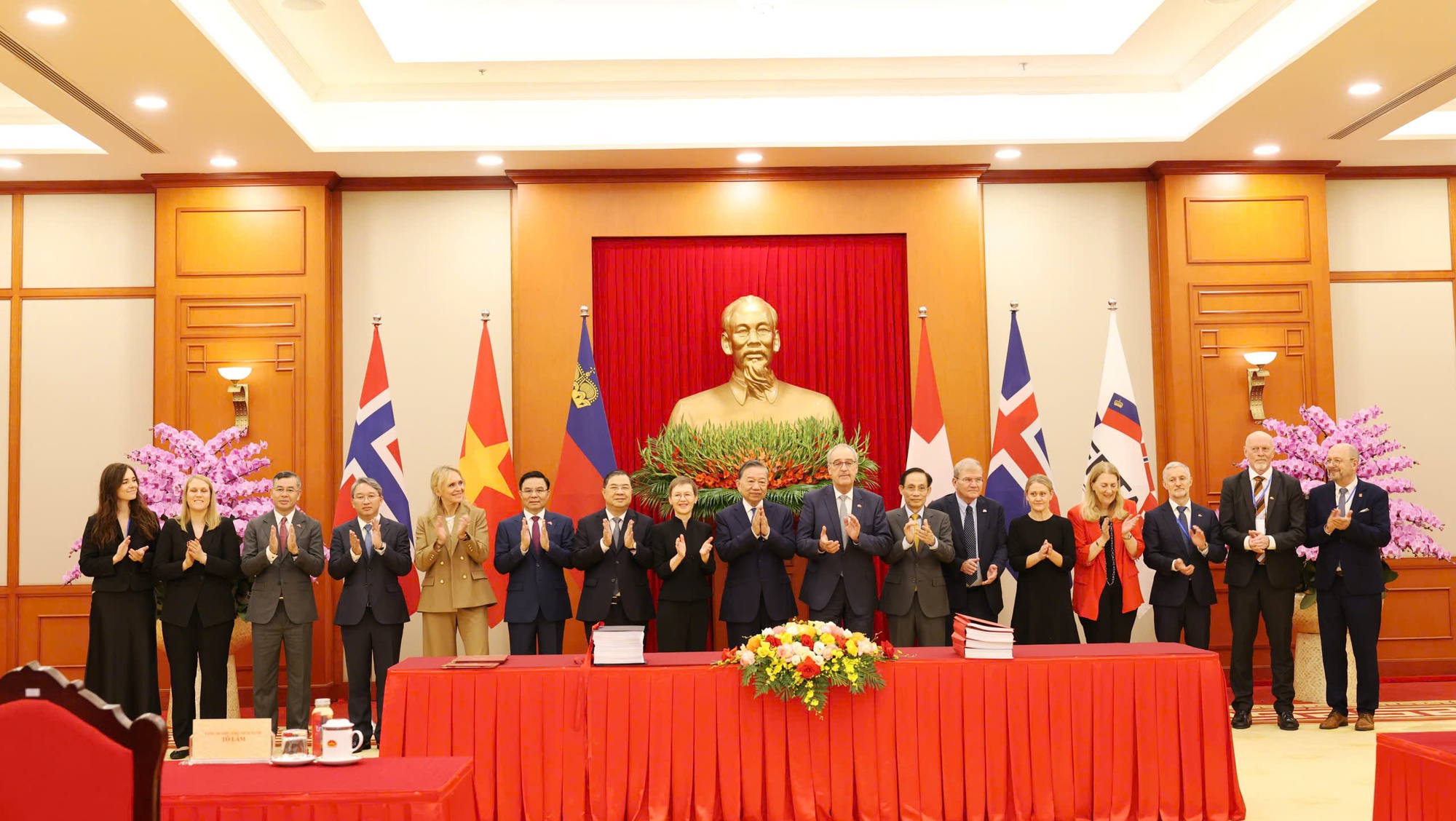
The agreement marks a major milestone in Vietnam’s economic relations with Europe, following years of negotiations. Unlike the European Union, EFTA is an independent trade association. The new agreement therefore broadens Vietnam’s network of European economic partnerships beyond its existing EU trade arrangements.
The Vietnam–EFTA Free Trade Agreement covers a wide range of areas, including trade in goods and services, investment, intellectual property, government procurement, competition, and sustainable development.
Once implemented, the agreement is expected to facilitate trade, improve market access, strengthen commercial cooperation, and create new opportunities for investment between Vietnam and the four EFTA countries.
The significance extends beyond trade for Vietnam
Switzerland is internationally recognised for its strengths in finance, pharmaceuticals, precision engineering, and advanced manufacturing. Norway brings considerable expertise in renewable energy, maritime industries, and sustainable development. Iceland and Liechtenstein offer specialised capabilities in innovation, technology, and financial services. These strengths complement Vietnam’s ambitions to move further into higher-value manufacturing, technology, logistics, and modern services.
According to Vietnam’s Government News, Switzerland had 234 active investment projects in Vietnam with registered capital exceeding USD 2.4 billion by the end of 2025, while Norway had 62 projects with registered capital exceeding USD 201 million.
The new agreement could provide a stronger foundation for expanding these existing investment relationships.
The EU Removes Vietnam from Its Tax Non-Cooperation List
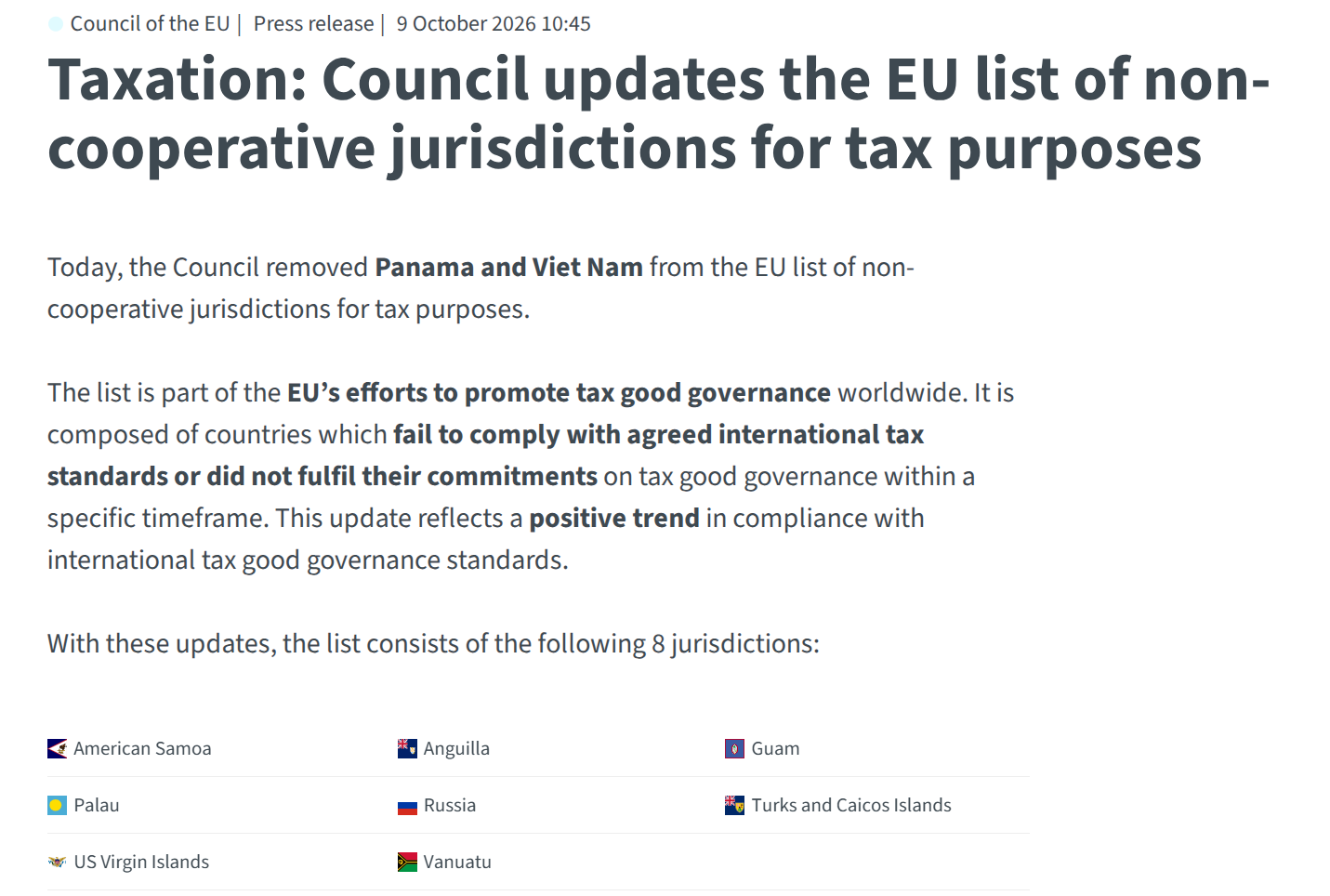
Just days earlier, on October 9, 2026, the Council of the European Union announced the removal of Vietnam from its list of non-cooperative jurisdictions for tax purposes.
Vietnam was moved from Annex I to Annex II, reflecting progress in addressing outstanding tax governance concerns while further international review remains pending. Although this decision does not mean that all tax-related assessments have been completed, it represents a meaningful step forward in Vietnam’s cooperation with international tax standards.
For European businesses and institutional investors, tax transparency and regulatory predictability are important considerations when evaluating international markets. Improvements in these areas can support investor confidence, reduce perceived regulatory uncertainty, and encourage deeper engagement between international financial institutions and Vietnamese businesses.
The decision also reflects Vietnam’s broader efforts to improve its investment environment, strengthen transparency, and align domestic practices more closely with international expectations.
International capital follows opportunities, but it also seeks confidence, transparency, and long-term stability. Progress in these areas is therefore particularly relevant to Vietnam’s ambitions to attract higher-quality foreign investment.
A Strong Foundation: EU–Vietnam Trade Growth and Strategic Partnership
€76B
Two-way Trade in 2025
+67%
Trade growth vs. 2019
€52.6B
Two-way trade in the first 7 months of 2026
99%
Duty-free access under EVFTA
Economic cooperation between Vietnam and the European Union has already demonstrated remarkable growth. Since the EU–Vietnam Free Trade Agreement (EVFTA) entered into force in August 2020, bilateral trade has expanded significantly. According to Eurostat data reported by Vietnam News Agency, two-way trade reached EUR 76 billion in 2025, approximately 67% higher than in 2019. This momentum continued into 2026, with bilateral trade reaching EUR 52.6 billion in the first seven months, up 23.2% year on year.
Beyond trade, diplomatic relations reached another milestone in January 2026, when Vietnam and the EU officially upgraded their relationship to a Comprehensive Strategic Partnership — the EU’s first such partnership in Southeast Asia. These achievements demonstrate the growing depth of economic and strategic cooperation between the two markets.
Combined with the latest EFTA agreement and progress in international tax cooperation, they provide a stronger foundation for European businesses and investors considering long-term opportunities in Vietnam, particularly in advanced manufacturing, technology, infrastructure, and real estate.
A New Wave of European Investment Flows
Vietnam has already established an important commercial relationship with Europe through the EU–Vietnam Free Trade Agreement (EVFTA), which entered into force in August 2020. The latest developments further strengthen this relationship by expanding Vietnam’s trade connections with non-EU European economies while reinforcing its engagement with EU regulatory standards. Together, these developments could influence investment decisions through several channels.
Greater market access and commercial integration
Trade agreements can help businesses access new markets, diversify suppliers, and strengthen cross-border supply chains. For European companies considering expansion in Asia, Vietnam may become increasingly attractive as a regional manufacturing, distribution, and commercial base.
Improving confidence among international investors
Institutional investors, multinational companies, and financial institutions typically assess not only growth potential but also regulatory compliance, transparency, and operational risks. Vietnam’s progress in tax cooperation may contribute positively to these assessments, although investment decisions will continue to depend on broader legal, financial, and market conditions.
Opportunities for higher-value foreign direct investment
European investment could increasingly support industries where Vietnam is seeking to develop greater capabilities, including advanced manufacturing, renewable energy, pharmaceuticals, logistics, financial services, and technology. Rather than attracting capital alone, Vietnam has an opportunity to benefit from technology transfer, management expertise, international standards, and stronger integration into global value chains.
The Potential Impact on Vietnam's Real Estate Market
Foreign direct investment does not flow exclusively into factories, offices, or commercial facilities. Its economic effects can extend into surrounding property markets. As international companies establish or expand their operations in Vietnam, they create demand for industrial facilities, logistics infrastructure, commercial spaces, and housing. Several property segments could benefit from stronger European economic engagement.
Industrial and logistics real estate
Manufacturing investment can stimulate demand for industrial land, ready-built factories, warehouses, and logistics facilities. Industrial centres across northern and southern Vietnam may benefit if stronger European trade links translate into additional manufacturing and supply-chain investment.
Grade A office space
The expansion of international companies, financial institutions, and professional service providers can support demand for modern offices in major business centres, particularly Hanoi and Ho Chi Minh City.
Serviced apartments and expatriate housing
Greater international business activity may also bring additional foreign executives, specialists, and their families to Vietnam. This could support demand for professionally managed rental apartments, serviced residences, and high-quality housing in well-connected urban neighbourhoods.
Residential and long-term property investment
Over time, stronger economic activity, employment creation, and infrastructure development may contribute to underlying residential property demand. However, the impact will vary by location and segment, and foreign property investment remains subject to Vietnam’s applicable ownership and investment regulations. For property investors, the key is to identify locations where economic fundamentals, employment growth, infrastructure, and genuine housing demand converge.
Vietnam's Growing Opportunities for European Investment
The global investment landscape is evolving as international businesses diversify supply chains, explore new production locations, and seek markets offering long-term growth potential, infrastructure development, and international connectivity. With its established manufacturing base, expanding trade network, growing domestic market, and strategic location in Southeast Asia, Vietnam is well-positioned to benefit from these shifts.
October 2026 marks another important milestone in Vietnam’s economic engagement with Europe. The signing of the Vietnam–EFTA Free Trade Agreement and the EU’s decision to remove Vietnam from its tax non-cooperation list represent progress in expanding market access and strengthening international regulatory cooperation. Together, these developments create a more encouraging environment for European businesses and investors exploring opportunities in Vietnam, with potential benefits extending beyond traditional trade into advanced manufacturing, technology, renewable energy, financial services, infrastructure, and real estate.
Nevertheless, translating these positive developments into substantial investment inflows will require continued improvements in administrative efficiency, legal certainty, infrastructure, workforce capabilities, and the implementation of international commitments. For international investors taking a long-term perspective, Vietnam presents an increasingly compelling market as its economic relationships with developed European economies continue to deepen.
The next chapter of Vietnam’s growth will be defined not only by the foreign capital it attracts, but also by its ability to transform international partnerships into sustainable economic development and lasting investment opportunities.
Sources and References
- Vietnam Government News — Vietnam Officially Signs Free Trade Agreement with EFTA, October 18, 2026.
- Vietnam Government News — Vietnam Welcomes EU Decision to Remove It from the Tax Non-Cooperation List, October 10, 2026.
- European Free Trade Association — EFTA and Vietnam Sign Free Trade Agreement, October 18, 2026.
- Council of the European Union — EU Tax List Update, October 9, 2026.