Hanoi’s Urban Transformation: The 2026–2030 Turning Point
On December 29, Vietnam simultaneously broke ground on, inaugurated, and opened for technical operation a total of 234 projects nationwide. These included 148 newly launched projects and 86 projects that were inaugurated or opened for technical traffic.
The combined investment value exceeded VND 3.4 quadrillion, of which 96 projects were funded by state capital, totaling more than VND 627 trillion—accounting for approximately 18% of total investment.
The remaining 138 projects were financed by non-state sources, with a combined value of over VND 2.7 quadrillion, representing roughly 82% of the total investment.
In Hanoi, the capital city, seven major projects with a combined investment of around VND 2 quadrillion stand out as a true turning point, set to completely transform the city’s urban landscape and elevate Hanoi to stand shoulder to shoulder with the world’s major metropolitan centers.
Let us take a closer look at these landmark infrastructure projects.
1. The Red River Scenic Boulevard Megaproject
- Developer: A consortium comprising Dai Quang Minh, Van Phu Invest, MIK Group, THACO, T&T Group, and Hoa Phat Group
- Expected completion: 2030
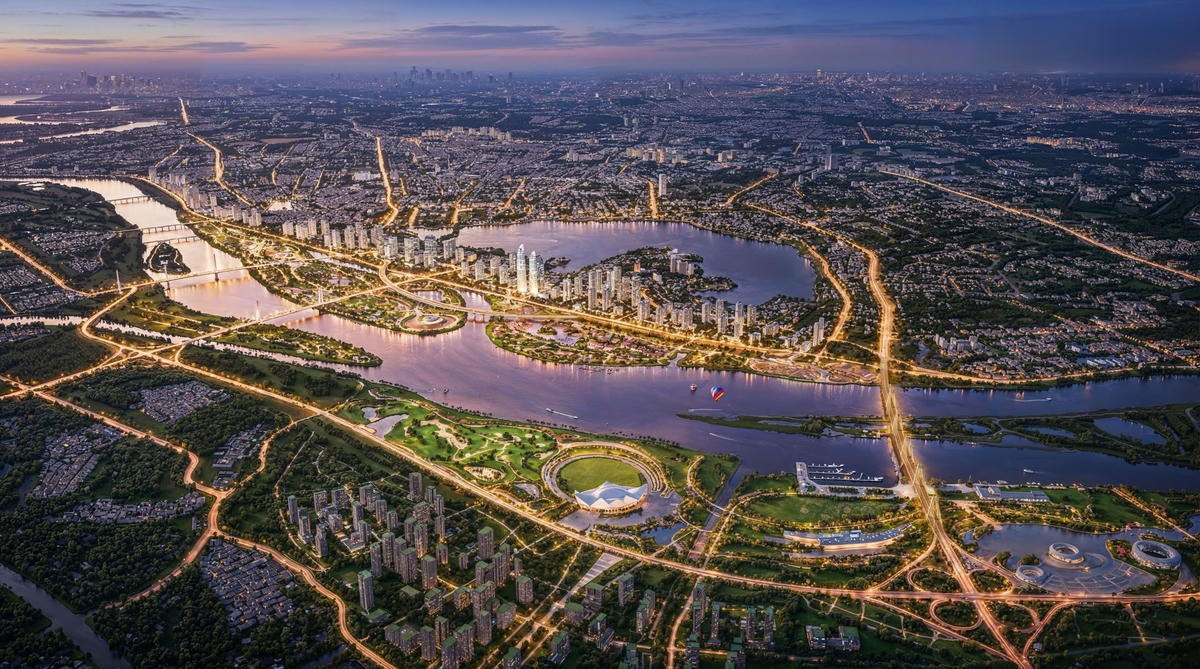
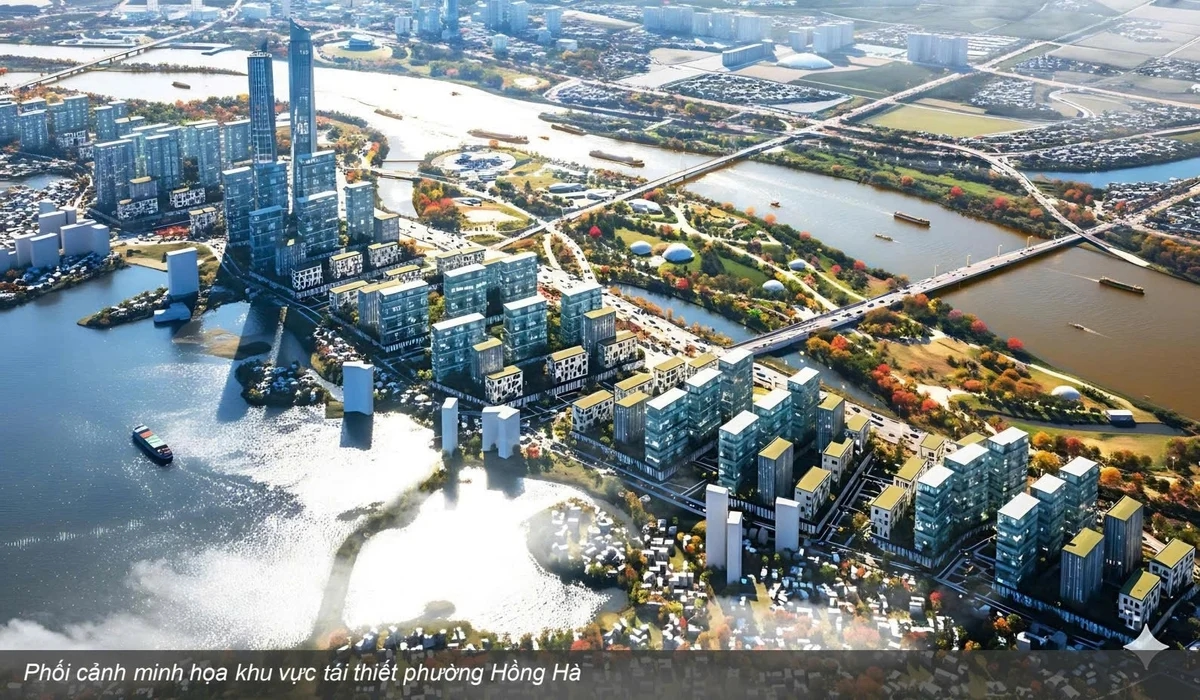
Also known as the “Red River Miracle”, this landmark project is envisioned to create the most beautifully planned and landscaped urban corridor in Vietnam, transforming the Red River area into a new national financial and economic hub located at the very heart of Hanoi.
The project has a preliminary total investment of approximately VND 855 trillion, with a study area of around 11,000 hectares. It includes an 80-kilometer scenic transportation axis, an extensive park and public space system, and large-scale urban regeneration zones.
The project stretches from Hong Ha Bridge to Me So Bridge, passing through 19 wards and communes of Hanoi.
- Right Bank (West of the Red River):
O Dien, Thuong Cat, Dong Ngac, Phu Thuong, Hong Ha, Vinh Tuy, Vinh Hung, Linh Nam, Hoang Mai, Thanh Tri, Nam Phu, Hong Van. - Left Bank (East of the Red River):
Me Linh, Thien Loc, Vinh Thanh, Dong Anh, Bo De, Long Bien, Bat Trang.
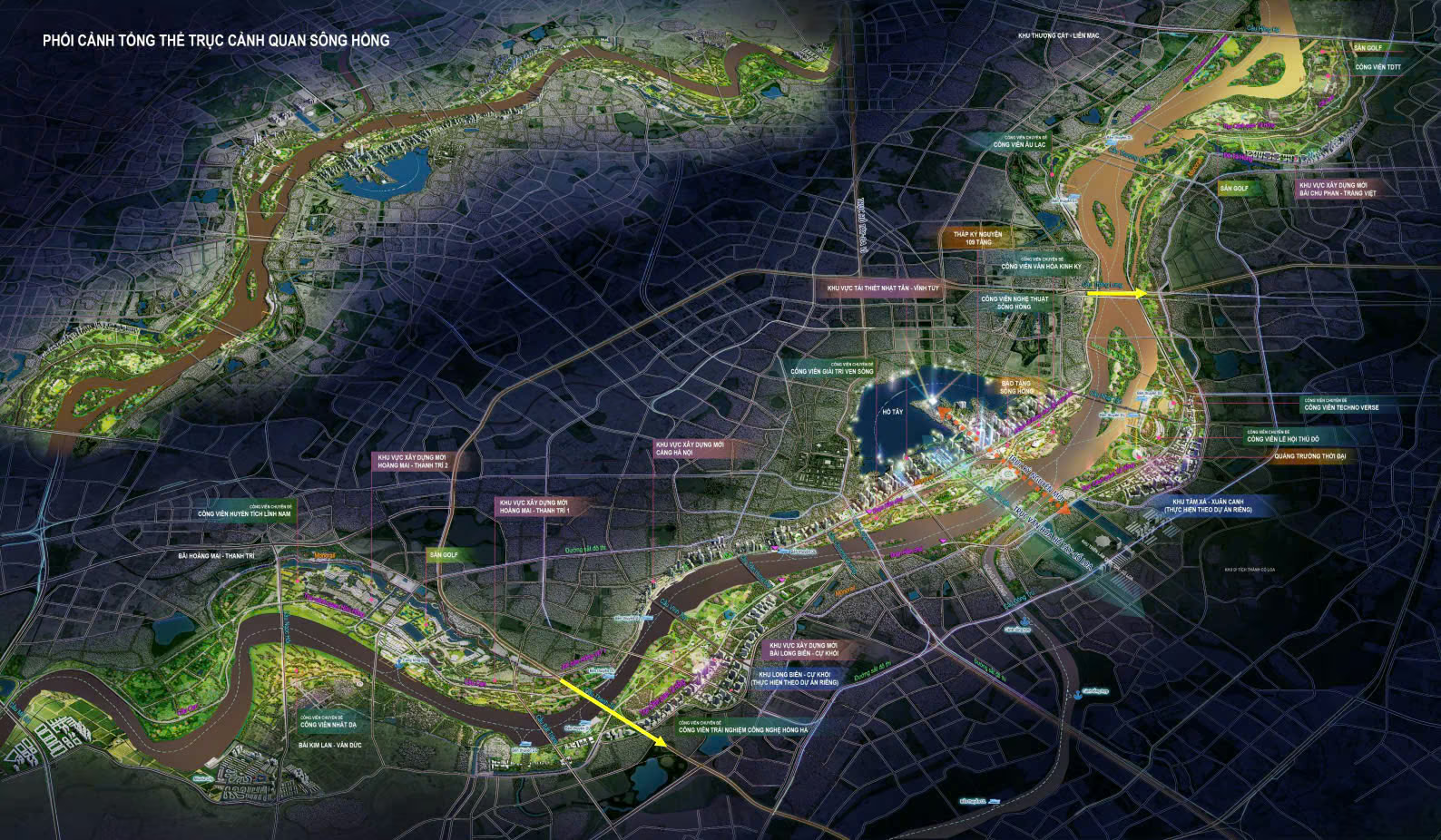
Project Structure: Four Independent Subprojects
Subproject 1: Left-Bank Scenic Boulevard
- Implemented across seven wards and communes, this subproject includes:
- A left-bank boulevard with 4–10 traffic lanes, approximately 35.78 km in length
- A riverfront scenic road of around 29 km
- Four landscape park clusters with a combined area of approximately 2,250 hectares
- A left-bank river embankment system extending roughly 29 km
Subproject 2: Right-Bank Scenic Boulevard
- Developed along the Red River from Hong Ha Bridge to Me So Bridge, featuring:
- A right-bank boulevard with 8–10 lanes, approximately 44.82 km long
- A riverfront scenic road of about 19 km
- Four riverfront park clusters totaling around 1,004 hectares
- A right-bank embankment system extending approximately 30 km
Subproject 3: Underground Metro Line
- An underground metro line along the right bank of the Red River, approximately 42 km in length
- Passing through nine wards and communes, enhancing mass transit capacity for the river corridor
Subproject 4: Resettlement Urban Areas
- High-rise residential developments built on-site within the overall project area
- Designed to support households displaced by the project, ensuring social stability during urban regeneration
Multi-Layered, Multi-Functional Urban Vision
- Upper Layer: Urban structures and built facilities
- Middle Layer: Parks, semi-flooded landscapes, and flexible public spaces
- Lower Terrace: Floodable ecological parks, creating a seamless interface between nature and the city
2. Olympic Sports City
- Developer: Vingroup
- Planned completion: Olympic Stadium: 2028, Sports urban area: 2030, Entire project: 2035
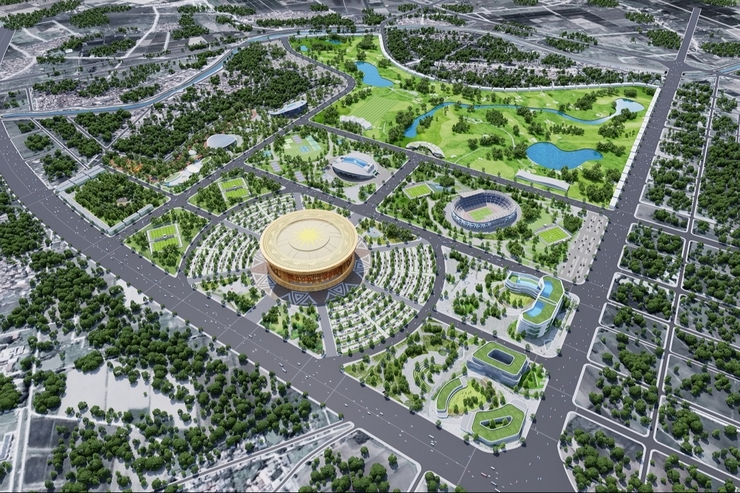
The Olympic Sports City is a mega-scale development of exceptional strategic significance. The project has a preliminary total investment of approximately VND 925 trillion, covering an area of about 9,171 hectares, with an estimated population of 751,000 residents. It will be developed across 11 wards and communes of Hanoi, including Dai Thanh, Ngoc Hoi, Nam Phu, Thuong Tin, Hong Van, Chuong Duong, Thuong Phuc, Binh Minh, Tam Hung, Thanh Oai, and Dan Hoa.
The Olympic Sports City is envisioned as a modern integrated sports–urban complex, capable of enabling Hanoi to host major continental and international sporting events such as the Asian Games (ASIAD), the Olympic Games, and the FIFA World Cup.
Project Highlight: The Trống Đồng (Bronze Drum) Stadium
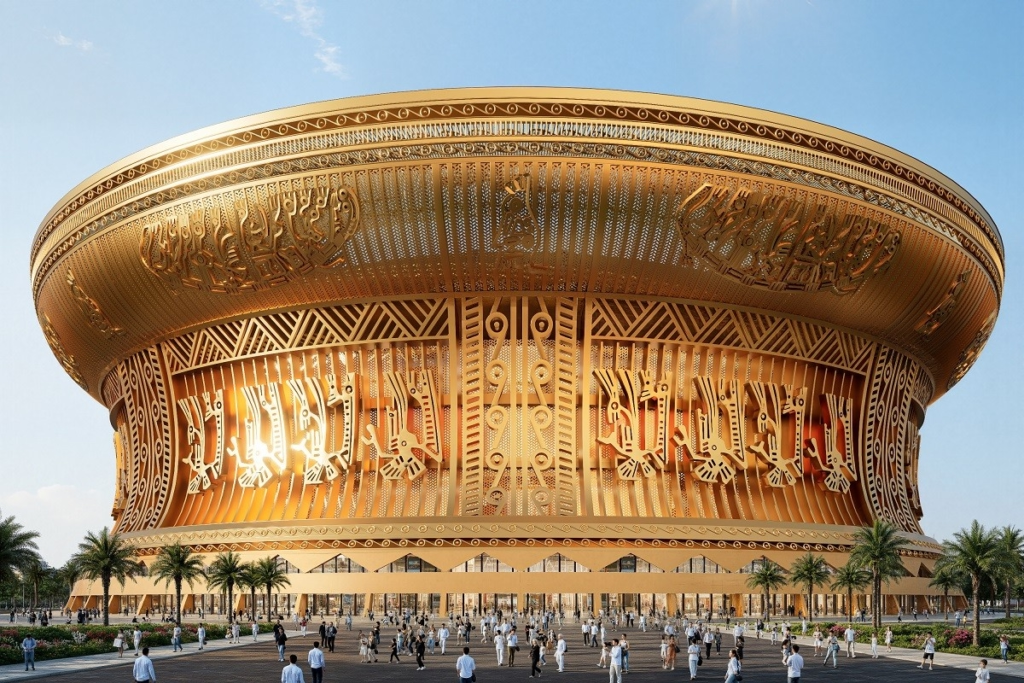
The centerpiece of the development is the Dong Co Stadium, a national-level landmark constructed on a 73.3-hectare site, with a seating capacity of up to 135,000 spectators. The stadium is designed to FIFA standards and will feature the world’s largest retractable roof system.
According to the project roadmap, the stadium is scheduled for completion by August 2028, serving as the catalyst for the gradual formation of a regional and international sports–urban hub in Hanoi.
A Green and Smart Stadium of Global Standards
The stadium is positioned as a green and intelligent facility, integrating advanced technologies, including:
- AI-enabled pitch replacement, allowing the playing surface to be renewed within 6–10 hours
- Smart seating with 5G connectivity
- Real-time security and crowd-flow management
- Rainwater harvesting and recycling systems, reducing clean water consumption by up to 70%
- Heat- and UV-resistant materials, combined with natural ventilation to lower air-conditioning energy demand and reduce noise pollution
The stadium will also include dedicated VIP and state-reception areas, designed to meet international protocols for hosting heads of state and high-level delegations during major events.
3. To Lich River Linear Park Revitalization and Urban Regeneration Project
- Developer: Sun Group
- Expected completion: 2028
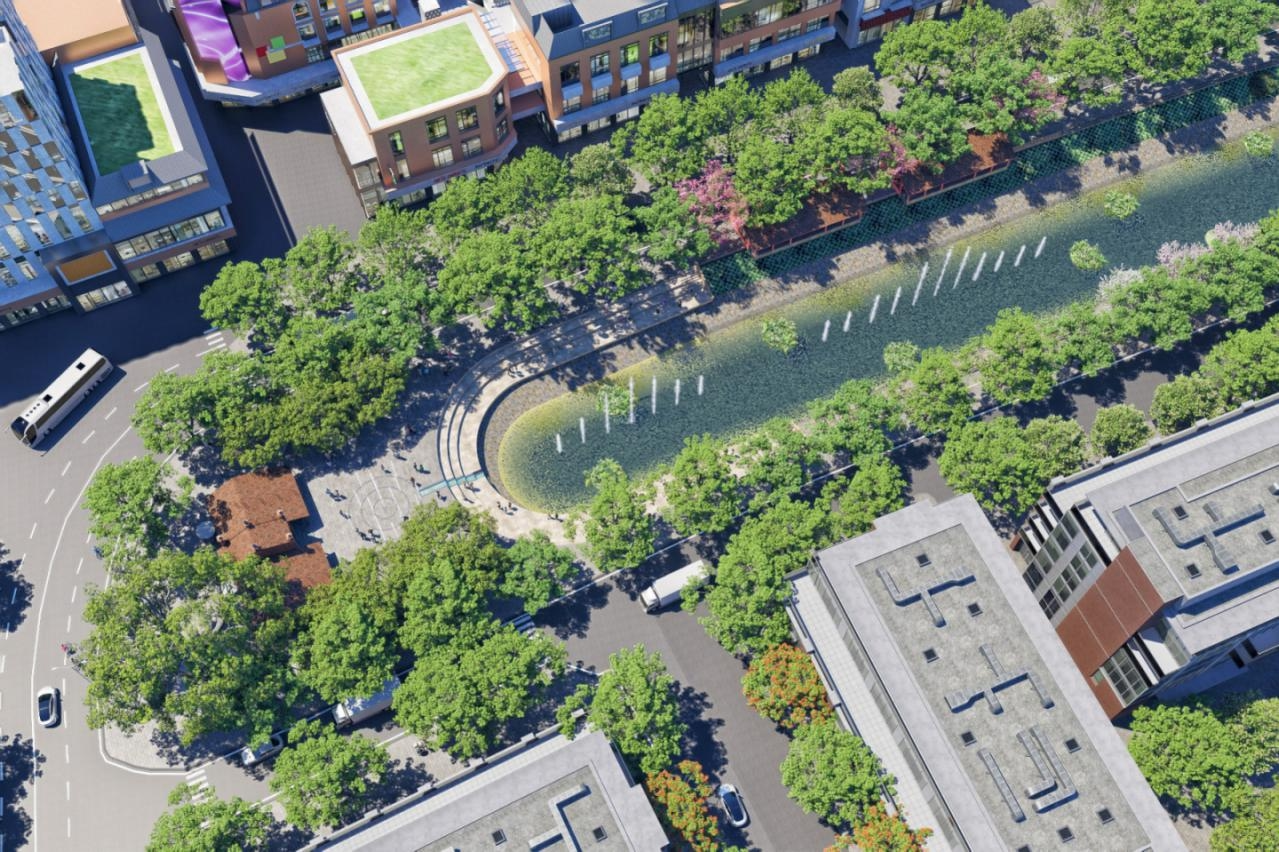
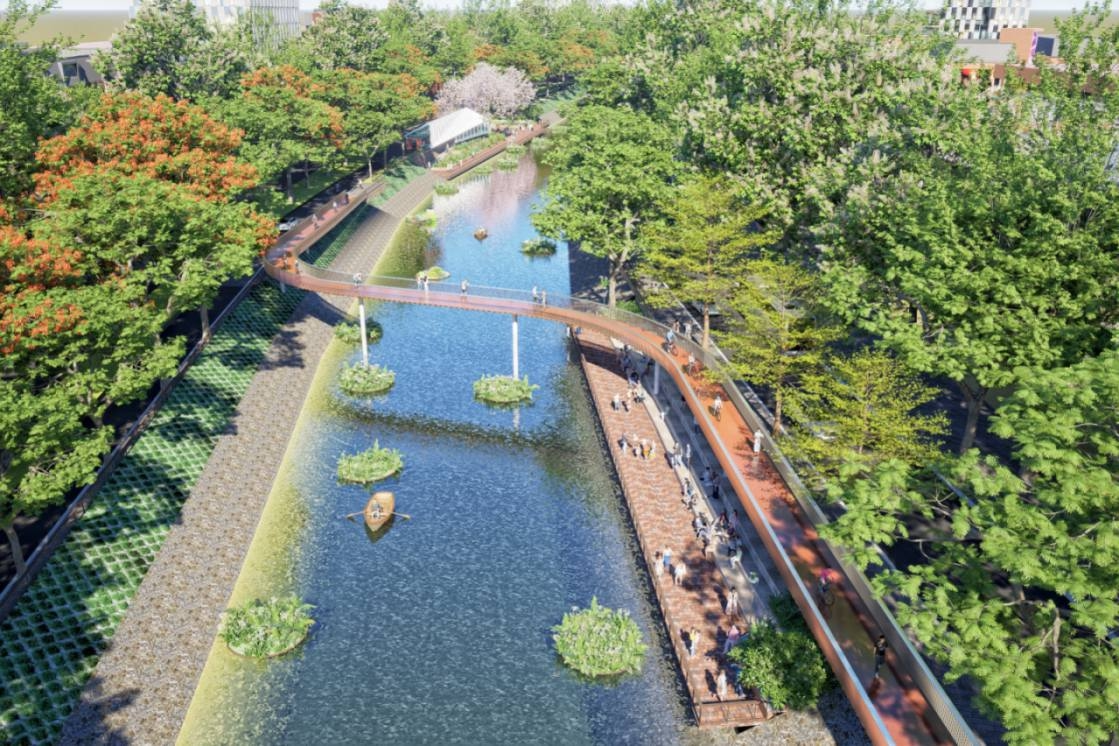
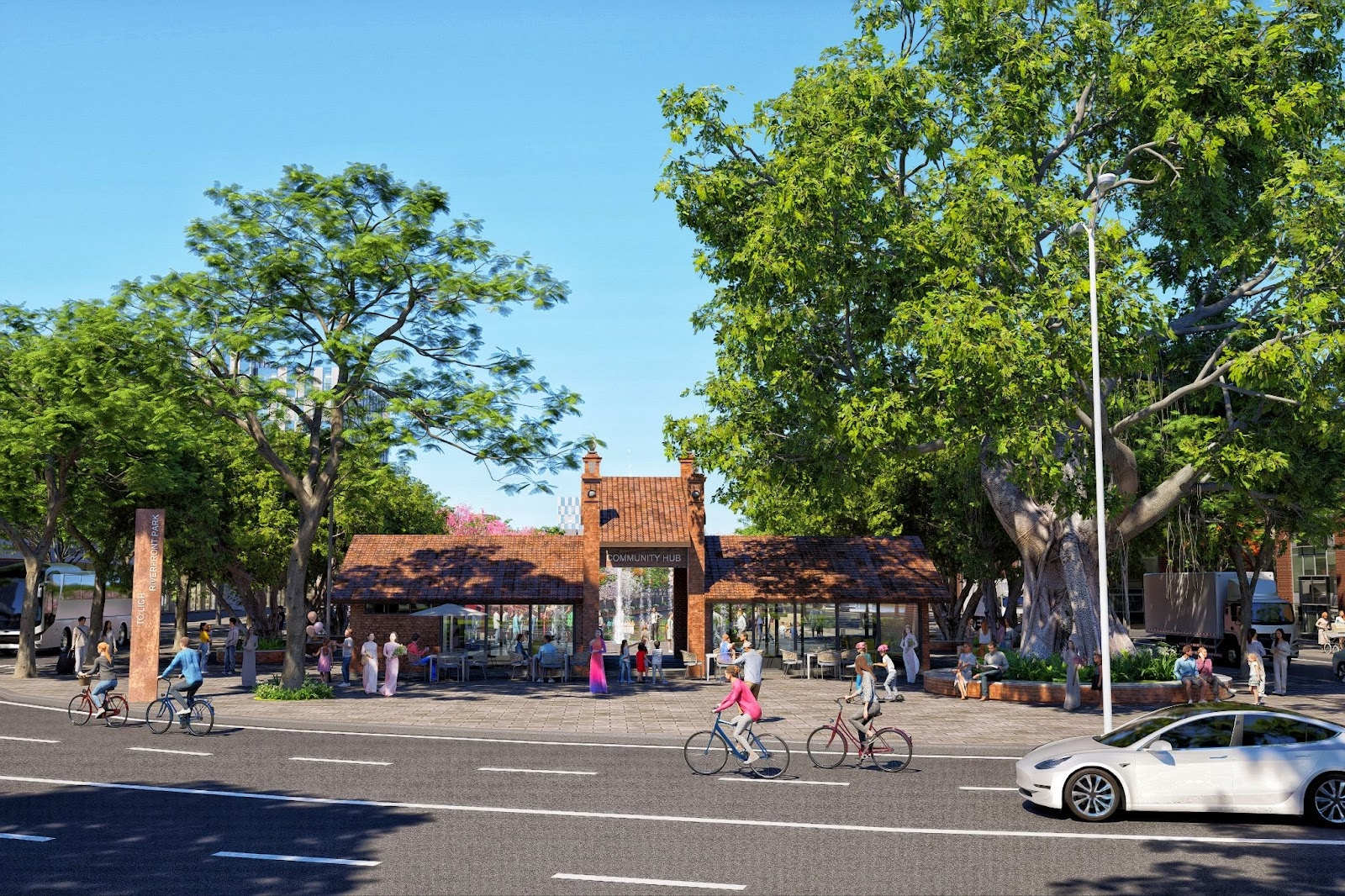
This project involves the revitalization, upgrading, and urban regeneration of a linear park system along both banks of the To Lich River, with a preliminary total investment of approximately VND 4.665 trillion.
The development stretches over 13 kilometers along the To Lich River, passing through key central and southern districts of Hanoi, including Tay Ho, Ngoc Ha, Nghia Do, Cau Giay, Giang Vo, Lang, Yen Hoa, Dong Da, Thanh Xuan, Khuong Dinh, Dinh Cong, Thanh Liet, and Hoang Liet.
The project is scheduled for implementation from 2025 to 2028.
Distinctive Design and Cultural Integration
A defining feature of the project lies in its iconic architectural elements, designed by leading international consultancy firms. Along both riverbanks, the plan includes artistic pedestrian bridges, boat piers, observation decks, and heritage exhibition pavilions.
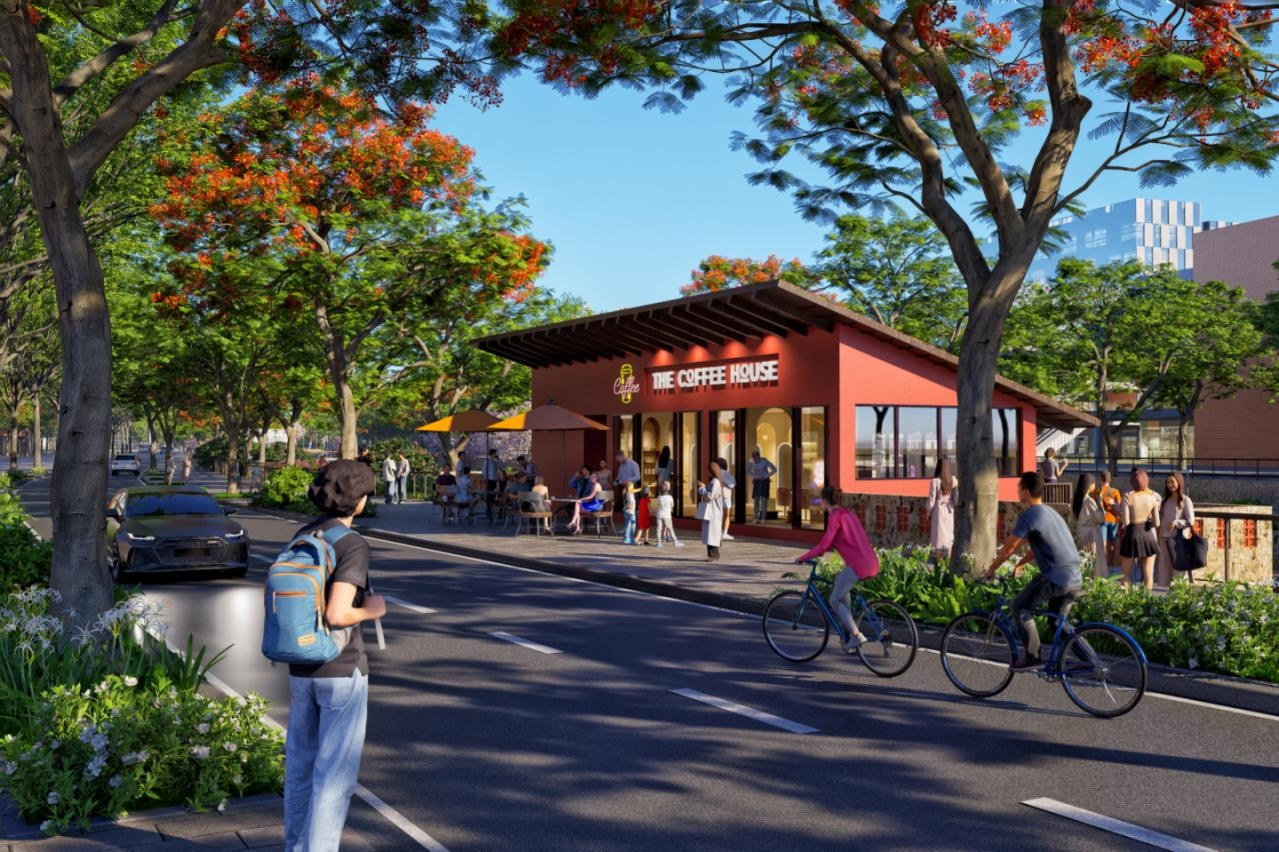
According to Sun Group, these structures are conceived as works of art, preserving and celebrating Hanoi’s cultural heritage and the historical identity of communities living along the river. The project will also introduce high-end service spaces such as cafés and fine-dining restaurants, seamlessly integrated into the natural landscape, with the aim of attracting both residents and tourists.
Green Infrastructure and Public Amenities
The landscape system will feature large shade trees along the riverbanks, complemented by shrubs, lawns, aquatic plants, and pergolas. Public amenities will include seating, waste bins, outdoor fitness equipment, children’s playgrounds, decorative sculptures, and architectural lighting.
Sun Group has emphasized a comprehensive “greening” strategy for the entire river corridor, involving the planting of new shade trees, shrubs, grass lawns, and aquatic vegetation. The linear park will also provide multi-functional community spaces, such as children’s play areas, modern parking facilities, stepped river terraces, and outdoor relaxation zones, enhancing the diversity of recreational activities.
International Design Collaboration
To deliver this vision, Sun Group has partnered with two world-class design consultancies:
EDSA (USA) – a globally renowned firm specializing in urban planning, landscape architecture, and urban design
EGO Group (Italy) – an international design group known for architectural and experiential design excellence
4. Metro Line No. 5: Van Cao – Hoa Lac Urban Railway
- Developer: Hanoi Metropolitan Railway Management Board (MRB)
- Expected completion: 2030

Hanoi’s Urban Railway Line No. 5 (Van Cao – Ngoc Khanh – Lang – Hoa Lac) has a total investment of approximately VND 72.3 trillion, funded through a combination of state budget capital and mobilized financing via an EPC general contractor.
The line has a total length of 39.585 km, including:
6.56 km underground
5.21 km elevated
27.815 km at grade
The system will comprise 20 stations, including 6 underground stations, 12 at-grade stations, and 2 elevated stations, with 8 interchange stations.

Route Alignment and Technical Configuration
The line will start at the Van Cao – Hoang Hoa Tham intersection and terminate at Station S20, located in Hoa Lac and Yen Xuan communes.
The alignment runs underground within Ring Road 3, then transitions to at-grade and elevated sections along Thang Long Boulevard toward Hoa Lac.
A Strategic Backbone for Western Hanoi
Metro Line No. 5 is identified as a strategic infrastructure project with critical importance to Hanoi’s urban spatial development and sustainable transport planning in the new growth phase.
The line is envisioned as the backbone of Western Hanoi, directly linking the Ba Dinh political–administrative center with the Hoa Lac satellite city. It is expected to:
Alleviate traffic congestion
Catalyze socio-economic development
Support the formation of a modern, multi-centric urban structure
Long-Term Metro Vision for Hanoi
Under the approved master plan, by 2045, with a vision to 2065, Hanoi is expected to develop 15 urban railway lines with a combined total length of approximately 617 km, positioning mass transit as a cornerstone of the capital’s future mobility system.