

Vietnam Launches Its First Semiconductor Chip Factory, Marking a Major High-Tech Milestone
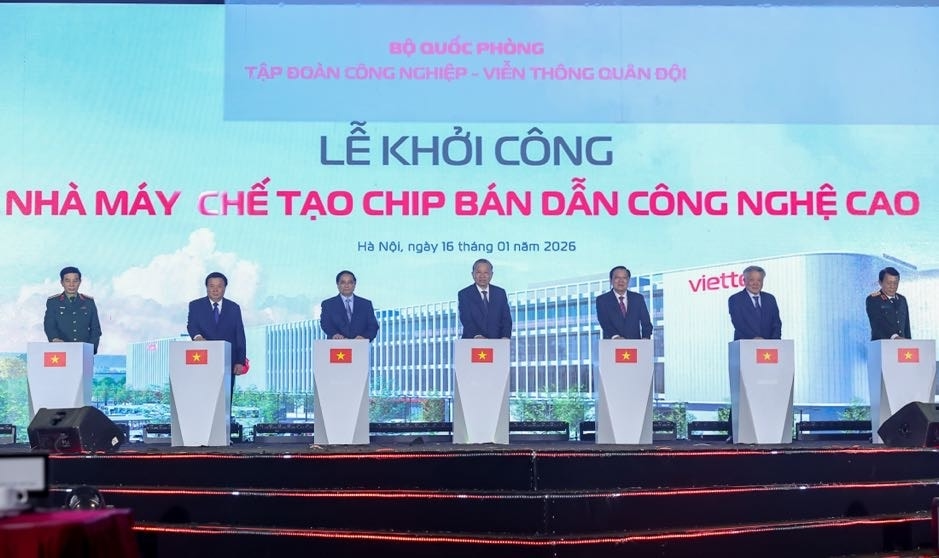
On January 16 in Hanoi, the Military Industry and Telecommunications Group (Viettel) officially broke ground on Vietnam’s first semiconductor chip manufacturing plant. The ceremony was attended by General Secretary Tô Lâm, Prime Minister Phạm Minh Chính, and senior leaders of the Party and State.
The project is implemented by Viettel under an assignment from the Ministry of National Defense, in accordance with a Government resolution.
This marks a significant milestone, as Vietnam establishes its first domestic semiconductor manufacturing capability, laying the foundation for gradually mastering core technologies and developing a national semiconductor ecosystem.
Completing a Fully Integrated Semiconductor Manufacturing Process in Vietnam
The plant is being built at the Hòa Lạc Hi-Tech Park in Hanoi, covering an area of 27 hectares, with the vision of becoming a national infrastructure hub for semiconductor research, design, testing, and manufacturing.
Once operational, the facility will serve key national industries such as aerospace, telecommunications, the Internet of Things (IoT), automotive manufacturing, medical devices, and automation. According to Viettel, a complete semiconductor chip product must go through six main stages: product definition, system design, detailed design, chip fabrication, packaging and testing, and integration and validation.
In recent years, Vietnam has gradually participated in five of these stages. However, chip fabrication—the most complex and critical step—has not yet been carried out domestically. The construction of this semiconductor manufacturing plant will enable Vietnam to complete and fully localize the entire semiconductor production process within the country.

The First Semiconductor Chip Manufacturing Plant: A Strategic Continuation of Viettel’s Core Technology Development
Semiconductor chip fabrication is among the most sophisticated and discipline-intensive technological processes today.
From a silicon wafer of near-absolute purity, a chip is created through approximately 1,000 consecutive technological steps over a three-month period. Even the slightest deviation at any stage can affect the entire production line, requiring exceptionally high levels of organization, management, and technological mastery.
For Viettel, being entrusted with leading the implementation of the semiconductor chip manufacturing plant represents a continuation of its long-term strategy to develop and master core technologies—a path the Group has persistently pursued for many years.

Viettel has proactively prepared its human resources through advanced training programs, international cooperation, and technology transfer, while also accumulating experience from research, design, and the application of chips in various technological systems and products.
The project will be implemented during the 2026–2030 period, following a roadmap that includes plant construction, technology acquisition, process completion, and improvements in operational efficiency.
In the long term, the Hòa Lạc facility is planned for scalable expansion, providing a foundation for Vietnam to gradually access more advanced semiconductor technologies.
The groundbreaking of the high-tech semiconductor chip manufacturing plant marks a significant milestone in Vietnam’s journey to build technological capabilities, contributing to the realization of the goal of “Technological self-reliance for a sustainable future.”
Targeting Pilot Semiconductor Chip Production by the End of 2027
Lieutenant General Tào Đức Thắng, Chairman and CEO of Viettel Group, stated that immediately after the groundbreaking ceremony, Viettel will move swiftly to implement the project. The Group aims to complete construction, receive technology transfer, and begin pilot semiconductor chip production by the end of 2027.
From 2028 to 2030, the project will focus on completing and optimizing manufacturing processes and improving production line efficiency in accordance with industry standards, serving as a foundation for research into more advanced semiconductor fabrication technologies.
Viettel commits to playing a pioneering and leading role in this national effort—contributing tangible results, treating progress as discipline, quality as the benchmark, and safety as a core principle—while working alongside the country to successfully implement Vietnam’s semiconductor industry development strategy.
Marking the Transition from Participation to Mastery
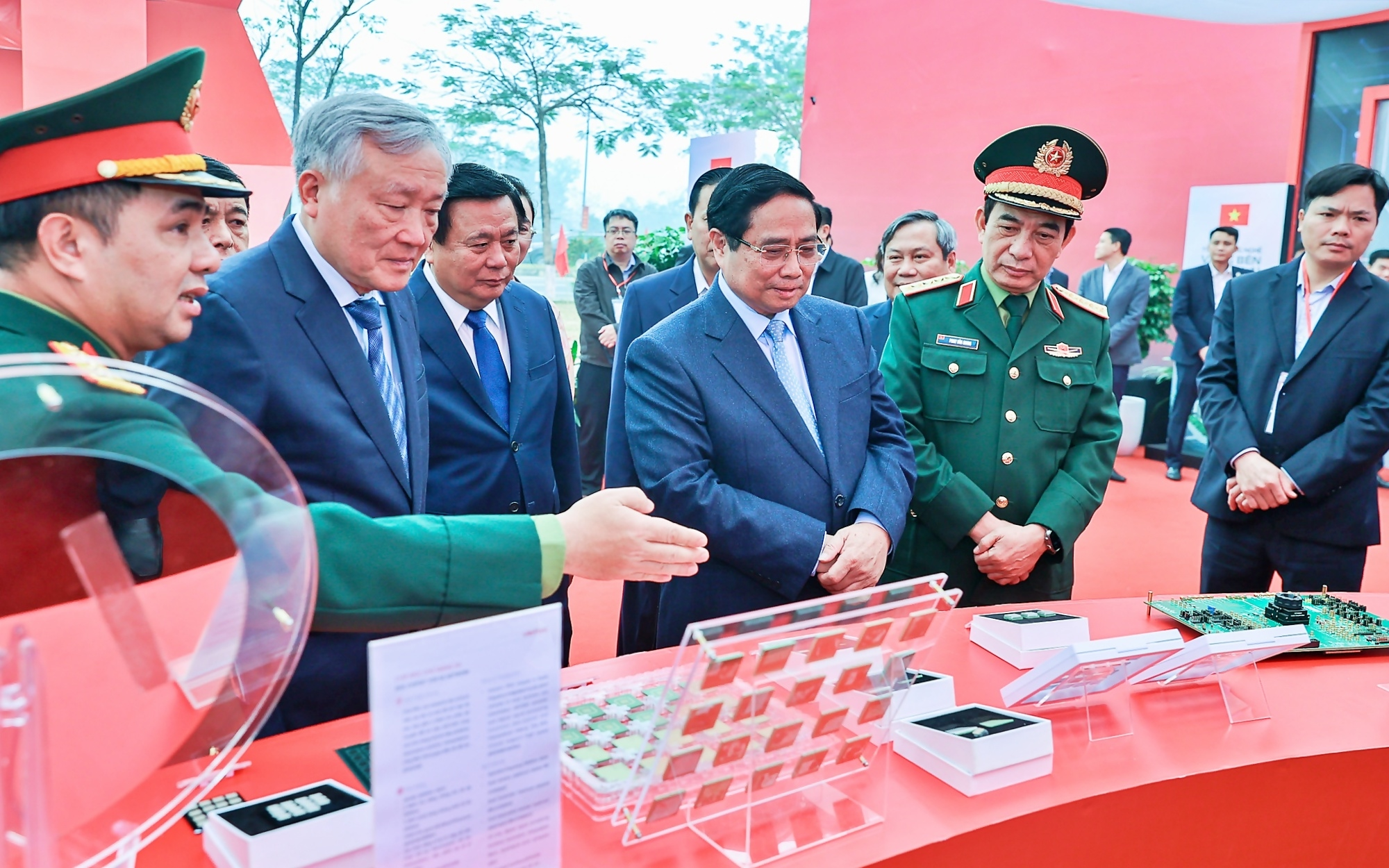
Prime Minister Phạm Minh Chính emphasized that the project is not merely an investment, but a strategic milestone reflecting Vietnam’s determination to engage deeply in the global semiconductor value chain, in line with the Semiconductor Industry Development Strategy to 2030, with a vision to 2050.
He noted that despite their small size, semiconductor chips are critical to national economic strength, industrial capacity, defense and security, and international standing, underpinning everything from household appliances to advanced AI systems.
The project aims to build domestic chip manufacturing capabilities, ensure technological security, develop a national semiconductor ecosystem, cultivate high-quality human resources, and attract private and foreign investment to form high-tech supply chains.