Sky Vaults: When Luxury Real Estate Becomes a Wealth Vault
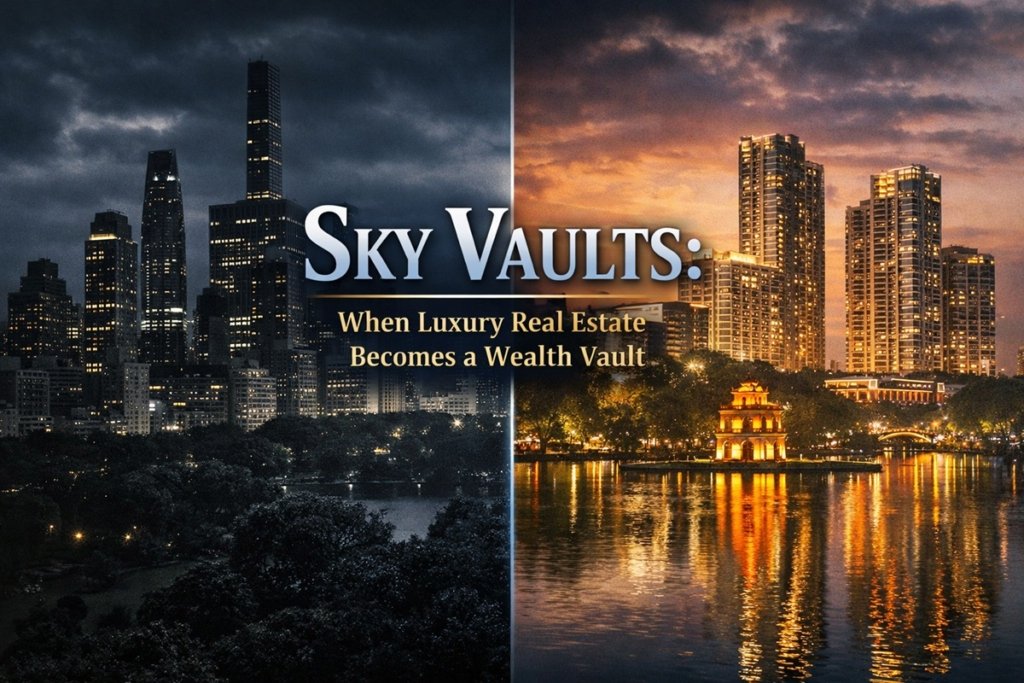
In the heart of New York City, some of the most expensive apartments on the planet remain dark for most of the year. Located along the stretch of ultra-luxury residential towers known as Billionaires’ Row, these multi-million-dollar homes are often unoccupied—not because they lack buyers, but because their owners rarely intend to live in them.
Behind the glass façades and panoramic views lies a different reality: for many of the world’s ultra-wealthy, these properties function less as homes and more as “sky vaults” — secure places to store wealth.
This phenomenon offers a revealing look at how global capital interacts with prime urban real estate. It may also provide an early glimpse of a trend that could eventually emerge in rapidly evolving cities such as Hanoi.
The World’s Most Expensive Neighborhood — With the Fewest Lights On
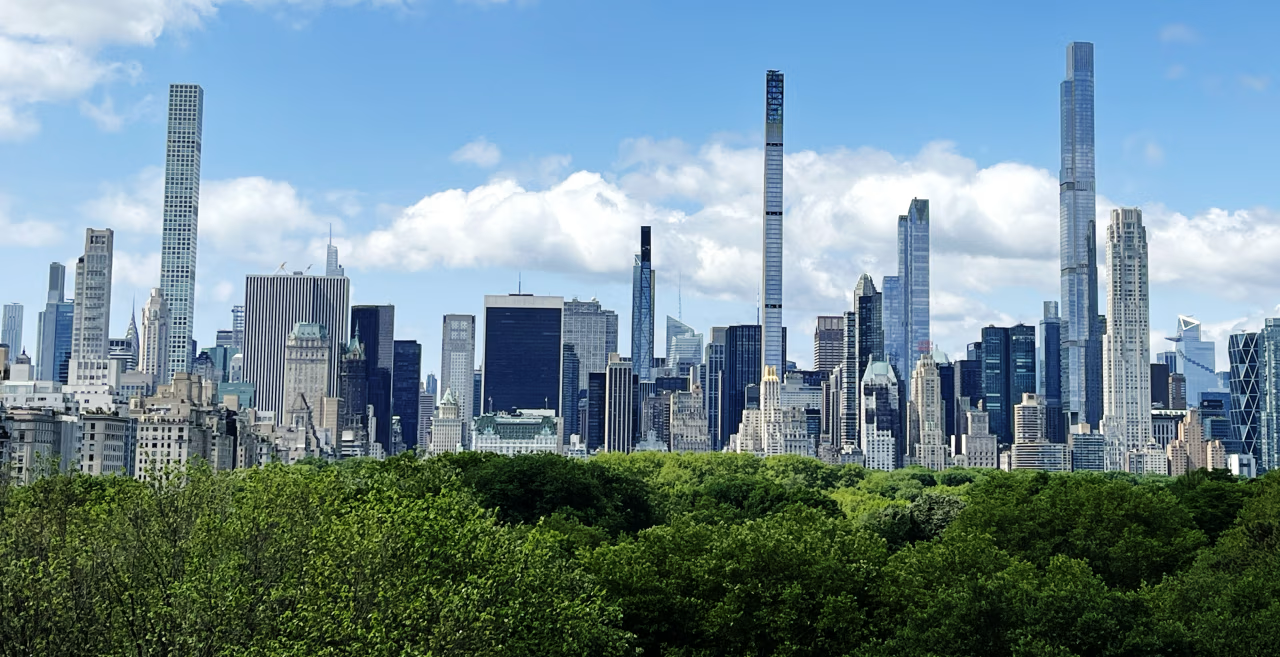
Billionaires’ Row sits along the southern edge of Central Park and hosts some of the tallest and most luxurious residential towers ever built, including Central Park Tower, 432 Park Avenue, One57, and 220 Central Park South.
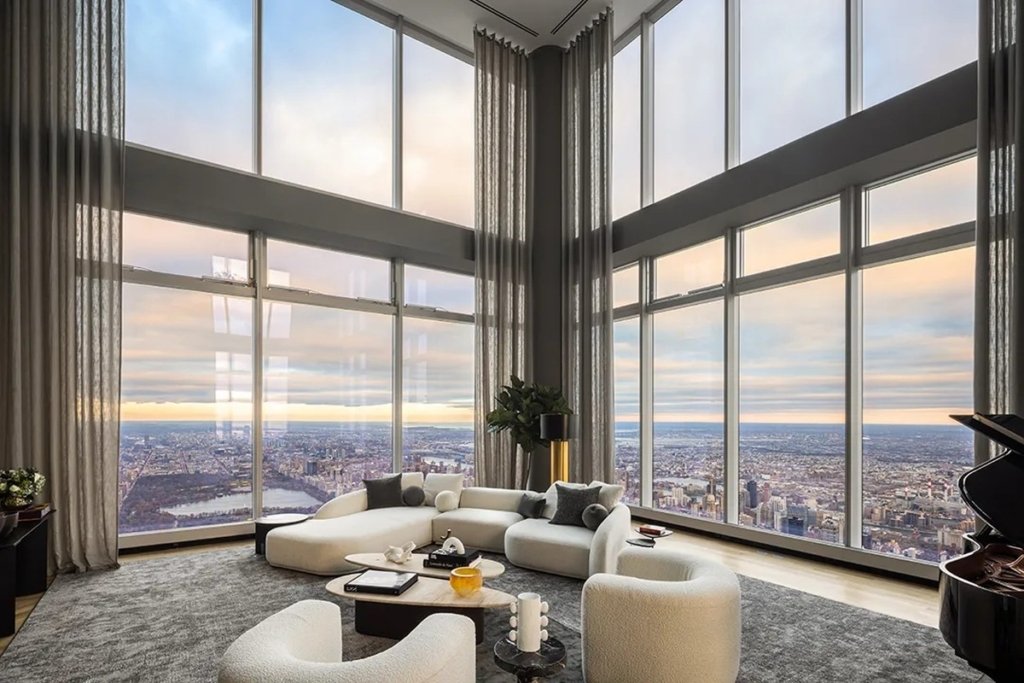
Developed largely during the 2010s, these buildings were designed to cater to a global elite seeking unmatched views, privacy, and exclusivity. Apartments often start at tens of millions of dollars, with penthouses reaching record-breaking prices.
Yet despite their prestige, many of these residences remain empty.
Real estate analysts estimate that nearly half of the apartments in several of these supertall towers are rarely occupied. Even in newly completed buildings like Central Park Tower—rising over 470 meters and holding the title of the tallest residential building in the Western Hemisphere—numerous units remain unsold or uninhabited years after completion.
At an average asking price of around $30 million per apartment, slow sales are not surprising. What is more striking is that many of the units that have been sold are rarely used by their owners.
Real Estate as a Global Wealth Vault
For international billionaires, these properties serve a purpose far beyond housing.
Prime real estate in Manhattan has long been regarded as a safe-haven asset, similar to gold or high-end art. Its value lies in stability, global prestige, and its ability to preserve wealth across economic cycles.
Investing in property priced in U.S. dollars also helps protect assets from currency fluctuations, inflation, or political uncertainty in investors’ home countries. In many cases, these properties can also be used as collateral for financing, providing liquidity without requiring a sale.
Another factor is privacy. Luxury apartments are often purchased through limited liability companies (LLCs), which allow owners to keep their identities confidential. For high-profile individuals or global investors, this structure offers a level of discretion that traditional financial assets may not provide.
Renting out these apartments is rarely a priority. Compared with the scale of their wealth, rental income is relatively insignificant, while managing tenants could introduce risks to the condition of the property. Leaving the apartment vacant preserves its pristine state and allows it to be sold quickly if liquidity is needed.
In this context, the true value of the property lies not in living space but in ownership of a stable, globally recognized asset.
Owners Who Rarely Appear
Some owners of these luxury residences are publicly known. In 2019, hedge fund billionaire Ken Griffin made headlines by purchasing a four-floor penthouse at 220 Central Park South for $238 million, setting a record for the most expensive home ever sold in the United States.
Technology billionaire Michael Dell previously bought a penthouse at One57 for more than $100 million, once the highest residential sale price in New York.
Other financial figures linked to the area include investors such as Bill Ackman and Daniel Och, along with wealthy buyers from the Middle East, Europe, and Asia.
However, for every identifiable owner, many others remain hidden behind corporate structures.
Even when owners are known, their presence in the building is often temporary. A billionaire might spend a few weeks in Manhattan before returning to estates in places like The Hamptons, villas in Saint-Tropez, or residences in Knightsbridge.
The result is a strange paradox: some of the most expensive homes in the world have the fewest full-time residents.
When Cities Become Global Asset Banks
The phenomenon seen in New York is not unique. Cities such as London, Vancouver, and Singapore have experienced similar trends, where luxury properties serve as financial storage for global capital.
In these markets, prime real estate is valued not only for location and lifestyle but also for its role as a secure long-term store of wealth.
As globalization continues to concentrate capital among a small number of ultra-wealthy individuals, the demand for such assets is likely to persist.
Could Hanoi Experience a Similar Future?
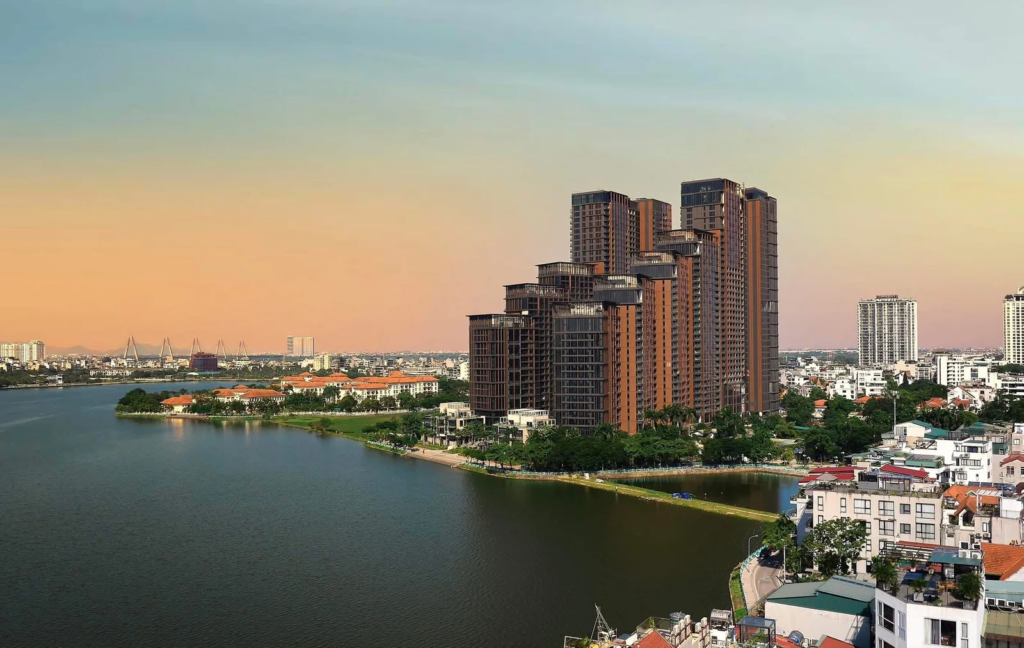
Looking ahead, the story of Billionaires’ Row may offer insights for emerging global cities—including Hanoi.
Vietnam’s capital is entering a new phase of urban transformation. Plans to restructure the historic inner districts, manage population density, and expand new urban centers toward the west and north are gradually reshaping the city’s spatial structure.
As these changes unfold, prime locations in the historic core could become increasingly scarce and valuable.
In such a scenario, luxury residences in the most prestigious parts of the city may evolve beyond traditional housing. Instead, they could become long-term asset holdings for high-net-worth individuals—both domestic and international—seeking stability, prestige, and capital preservation.
Just as Manhattan’s skyline now contains towers filled with rarely used apartments, a future Hanoi could also see high-end residences that function primarily as financial assets rather than everyday homes.
If that moment arrives, the city may witness its own version of the “dark towers”—places where the lights of luxury shine, even when their owners are rarely there.