

Korean toast is one of the easiest ways to start a Hanoi morning with something warm, filling and a little different from a bowl of pho. The Korean street sandwich of buttered bread, an egg-and-cabbage omelette, cheese, ham and a sweet-tangy sauce has followed the city’s large Korean community into cafés, bakeries and convenience stores. This guide explains what makes Korean toast distinctive, how the Hanoi scene has changed since we first featured Camto Cafe & Toast in 2020, where Korean food clusters in the city today, and how to make a good version in your own apartment kitchen.
What Is Korean Toast?
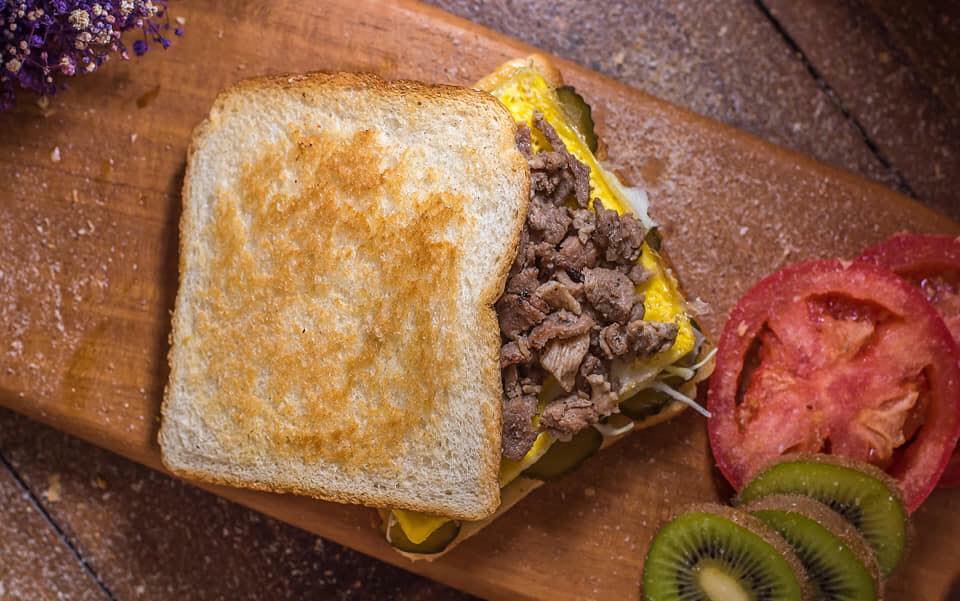
Korean street toast, often called gilgeori toast (길거리 토스트, literally “street toast”), is a hot pan-grilled sandwich sold from stalls and small shops across South Korea, usually as a quick breakfast. Two slices of soft white bread are toasted in butter on a flat griddle until crisp and golden. The heart of the sandwich is a thick omelette made with shredded cabbage, and often carrot and spring onion, cooked into a square that fits the bread exactly.
What sets it apart from a Western sandwich is the seasoning. Many vendors sprinkle a little sugar over the hot egg, then add ketchup and a sweet mustard or mayonnaise-style sauce, so each bite is sweet, salty and slightly sour at the same time. A slice of processed cheese melts into the egg, and ham is the classic extra.
Popular fillings and variations
The egg-and-cabbage base stays the same, but the fillings change from shop to shop. Common versions include:
- Ham and cheese – the standard street version and the best place to start.
- Bulgogi beef – sweet soy-marinated beef layered over the omelette.
- Chicken or bacon – often paired with a spicier sauce.
- Corn and cheese – a sweeter option popular with children.
- Vegetable only – just the cabbage omelette, cheese and sauce, for a lighter breakfast.
In Korea, chains have built whole menus around these combinations, and a toast with a canned or iced coffee is a familiar morning routine for students and office workers. That pairing of toast and coffee is exactly what Korean-style cafés abroad tend to copy.
Camto Cafe & Toast: An Update
When we first wrote this article in 2020, we recommended Camto Cafe & Toast, a franchise of a Korean toast-and-coffee brand that had opened a small café in a villa at Embassy Garden, Tay Ho Tay. At the time it was described as the brand’s only outlet in Vietnam, and it was one of the few places in Hanoi focused specifically on Korean toast.
When we reviewed the article in November 2026, we could not find any recent sign that this café is still trading, such as current listings, reviews or social media activity. For that reason we have removed the old address and map from this page. If you are in the Embassy Garden area and want to try it, check Google Maps or call ahead rather than relying on older blog posts. The rest of this guide focuses on places and options we could confirm are active.
Where to Find Korean Toast in Hanoi
Hanoi does not have a large chain dedicated only to Korean toast, so the best approach is to head to the areas and businesses where Korean food is concentrated. Menus change often, and not every outlet makes toast to order, so treat the suggestions below as places to look rather than a fixed list.
Korean neighbourhoods: Trung Hoa–Nhan Chinh and My Dinh
The Trung Hoa–Nhan Chinh area, spanning parts of the former Cau Giay and Thanh Xuan districts, is the older Korean hub and is widely called Hanoi’s Koreatown, with Korean-language signs, restaurants, grocery stores and cafés. Further west, the My Dinh area around Keangnam Landmark 72 is home to many Korean professionals, and the streets of Do Dinh Thien and Tran Van Lai are known locally as a Korean food street with dozens of Korean restaurants. Small cafés and bakeries in these areas are the most likely places to find made-to-order Korean toast, especially at breakfast time.
If you enjoy this side of the city, it is worth knowing that both areas offer plenty of rental choice for families and professionals. Our guide to apartments for rent in Cau Giay covers the buildings closest to the Korean community.
Korean bakery-café chains
Two Korean bakery brands operate in Vietnam and sell sandwiches, toast-style breads and coffee. Paris Baguette, originally from South Korea, has a small network of stores in Hanoi and Ho Chi Minh City; in 2025 its Vietnam business was acquired by Viet Thai International, the group behind Highlands Coffee. Tous les Jours, part of Korea’s CJ group, has been operating in Vietnam since well before 2020; check the brand’s store locator for its current Hanoi branches. Neither is a dedicated street-toast shop, but both are convenient for a Korean-style breakfast sandwich and coffee, and they are easy to find in shopping centres.
Korean convenience stores
Korean convenience chain GS25 opened its first Hanoi stores in March 2025 and expanded quickly in the north during that year. Korean convenience stores are known for ready-to-eat Korean snacks, sandwiches and instant foods, so they are a practical option for a quick bite, although they do not cook toast fresh on a griddle.
How to Make Korean Toast at Home
If you cannot find a café nearby, Korean toast is simple to make in any apartment kitchen, and most ingredients are available at local supermarkets. You need soft white sandwich bread, butter, eggs, a handful of finely shredded cabbage, a little carrot and spring onion, sliced cheese, ham, sugar and ketchup.
Beat two eggs with the vegetables and a pinch of salt, then cook the mixture in a buttered pan, folding it into a square roughly the size of a slice of bread. Toast the bread in butter on both sides in the same pan. Assemble with the omelette, a light sprinkle of sugar, cheese and ham, then finish with ketchup and mayonnaise or a sweet mustard. For Korean sauces and ingredients such as gochujang, look in the Korean marts in Trung Hoa–Nhan Chinh and My Dinh, or see our list of imported food stores for expats in Hanoi.
Living Near Hanoi’s Korean Food Scene
For many Korean families and other expats, being close to familiar food, schools and community services is a major factor when choosing where to live. The Trung Hoa–Nhan Chinh and My Dinh areas offer large apartment complexes with easy access to Korean shops and restaurants, while Tay Ho and the Starlake area in Tay Ho Tay appeal to those who prefer a quieter residential setting. You can read how one Korean client invested in a 3BR apartment in Tay Ho, or browse our list of apartment buildings in Hanoi to compare locations.
Frequently Asked Questions
What is Korean toast?
Korean toast, or gilgeori toast, is a pan-grilled sandwich of buttered white bread filled with an egg-and-cabbage omelette, cheese and usually ham. It is typically finished with a little sugar, ketchup and a sweet sauce, giving it a sweet-savoury taste.
Is Camto Cafe & Toast in Embassy Garden still open?
We could not find recent evidence that the Camto café at Embassy Garden is still operating, so we have removed its address and map from this article. Check Google Maps or contact the venue directly before making a trip.
Where is the best area to look for Korean toast in Hanoi?
The Korean neighbourhoods of Trung Hoa–Nhan Chinh and My Dinh, including the Korean food street around Do Dinh Thien and Tran Van Lai, have the highest concentration of Korean cafés, bakeries and restaurants. Breakfast time is when you are most likely to find toast made to order.
Do Korean bakery chains in Hanoi sell Korean toast?
Paris Baguette and Tous les Jours sell sandwiches, breads and coffee in Vietnam, but they are bakery-cafés rather than dedicated street-toast shops. Menus vary by outlet, so check what is available at the branch near you.
Can I make Korean toast at home in Hanoi?
Yes. Bread, eggs, cabbage, cheese, ham and ketchup are easy to buy at local supermarkets, and Korean sauces are sold in Korean marts and imported food stores. The whole sandwich takes about ten minutes in a single frying pan.